Key Takeaways: Certifications and compliance separate qualified suppliers from liabilities: Top aerospace metal finishing companies maintain active Nadcap, AS9100, and OEM approvals that provide strong evidence of audit readiness and operational control. Integrated...
Key Takeaways: Operating Environment Determines Coating Selection: Temperature extremes, chemical exposure, and UV radiation drive which custom aerospace coatings will perform reliably over the component lifespan. Compliance is Non-Negotiable: Aerospace coating...
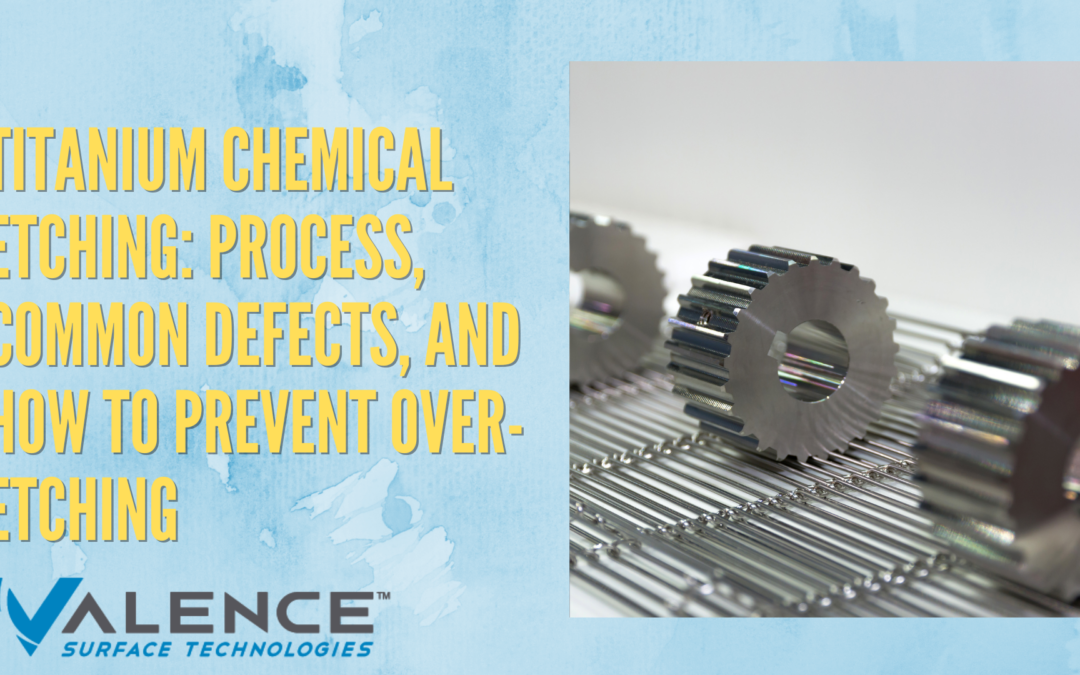
Key Takeaways: Titanium Etching Requires Precision Control: Acid concentration, temperature, and immersion time must be continuously monitored to prevent dimensional nonconformance and material property degradation. Common Defects Are Preventable: Over-etching,...
Key Takeaways: Contamination Drives Coating Failures: Surface contaminants account for the majority of adhesion problems, compliance failures, and performance issues in aerospace finishing. Prevention Requires Systematic Controls: Effective metal finishing...