
Key Takeaways:
- Gold Itself Doesn’t Tarnish: Corrosion on gold-plated parts stems from base-metal migration, porosity, or thin coatings—not the gold.
- Thickness And Barrier Layers Matter: Adequate gold thickness over a nickel barrier is what determines long-term aerospace performance.
- Process Control Is Everything: Consistent, spec-compliant plating separates reliable flight hardware from field failures.
Does gold plating tarnish? It is one of the most common questions engineers ask before specifying it on connectors and contacts, and the answer is more nuanced than a simple yes or no. Gold’s resistance to oxidation is well known, but coating thickness, porosity, and underlying base metal all influence how a gold-plated component performs over years of service.
At Valence Surface Technologies, we process millions of aerospace parts annually across a purpose-built platform of specialty plating, chemical processing, and testing services. Gold plating for mission-critical connectors and contacts is a discipline we control end-to-end under a single quality system.
In this piece, we’ll cover why gold-plated parts sometimes discolor, what drives durability, how thickness and barrier layers work, and how we ensure long-term performance for aerospace programs.
Does Gold Plated Tarnish? Understanding The Basics
Gold is one of the most chemically stable metals available, which is exactly why it’s used on flight-critical electrical hardware. Pure gold does not react with oxygen or sulfur under normal conditions, so it does not tarnish the way silver or copper does.
The confusion comes from the word “plated.” A gold-plated part is only a few microns of gold over a base metal. If that gold layer is too thin, porous, or applied without a proper barrier, the underlying metal can migrate to the surface and oxidize, producing what appears to be tarnish. So when someone asks whether gold-plated tarnish occurs, the honest answer is: the gold doesn’t, but a poorly engineered coating stack can fail.
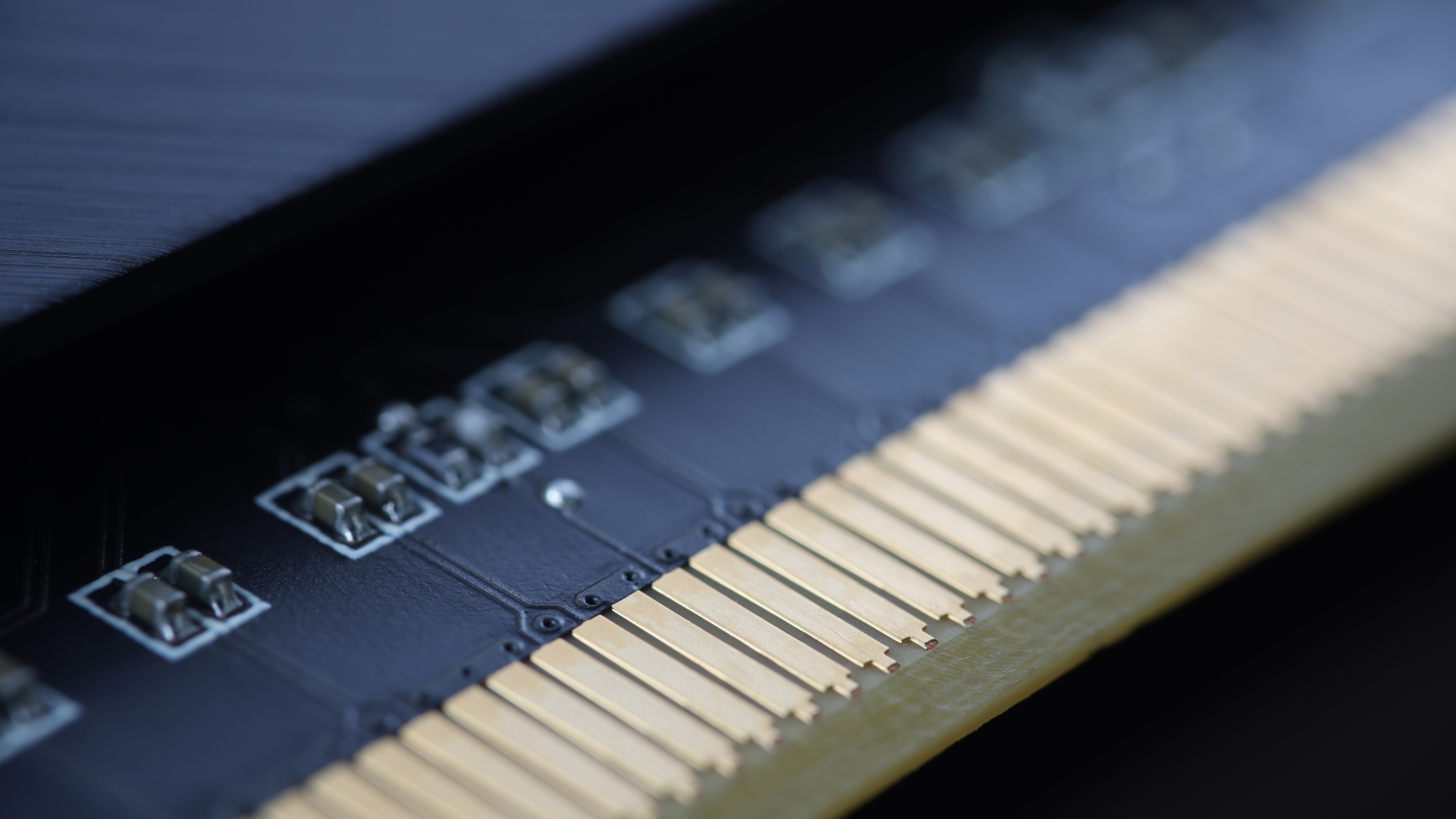
Will Gold Plated Coatings Tarnish Under Aerospace Operating Conditions?
Aerospace environments are harsh, with thermal cycling, humidity, salt fog, vibration, and vacuum all stressing a plated surface. A common question engineers raise early in the specification process is: Will gold plated coatings hold up under these conditions? Under properly specified coatings, the answer is yes, but marginal coatings expose their weaknesses fast.
Humidity and Corrosive Atmospheres
Moisture and salt-laden air attack base metals through any pore in the gold layer. A dense gold deposit over a nickel barrier resists this, while thin decorative-grade plating allows corrosion to creep up through porosity.
Thermal and Vacuum Exposure
Temperature swings and vacuum can drive base-metal atoms to diffuse toward the surface over time. A nickel underplate slows this migration, keeping the contact surface clean and conductive across the service life.
What Factors Affect Gold Plating Durability Aerospace Applications
Gold plating durability aerospace performance, isn’t a single property; it’s the result of several controlled variables working together. Get one wrong and the whole coating underperforms.
Base Material and Surface Prep
Contamination or poor surface preparation leaves voids that become corrosion sites. Clean, properly activated substrates are the foundation of a durable deposit.
Gold Purity and Hardness
Soft (pure) gold offers the best conductivity; hard gold, alloyed with cobalt or nickel, resists wear on mating contacts. The application dictates which is correct.
Deposit Density and Porosity
Low porosity is one of the most important predictors of corrosion resistance, alongside underplate integrity, thickness, substrate condition, and operating environment. Tight process control minimizes pinholes that let base metals reach the surface.
How Coating Thickness Impacts Long-Term Gold Plating Performance
Thickness directly governs how long a gold coating protects and how well it performs. Too thin, and porosity and wear-through become inevitable; over-specified, and cost climbs without benefit.
Matching Thickness to Function
Static, low-mating-cycle contacts tolerate thinner gold, while connectors that repeatedly mate and demate require thicker hard gold to withstand wear. Many aerospace connector contacts specify gold thicknesses in the approximate 0.8–1.5+ µm range, but the required thickness must be taken from the applicable drawing, connector specification, or procurement requirement.
Thickness and Porosity
Thicker deposits statistically contain fewer through-pores, which is why increasing thickness improves corrosion resistance. The goal is a continuous, sealed layer over the barrier metal.

Gold Plating On Connectors And Contacts: What Engineers Should Know
Gold plating is specified on aerospace connectors for its low contact resistance and oxidation resistance, both critical to reliable signal integrity. A few considerations matter most when specifying it correctly.
Coating Thickness Matters More Than Composition
Gold itself does not tarnish, but thin coatings can be porous enough to let the underlying base metal migrate to the surface and oxidize. Thickness specifications should align with the application’s expected service life and environmental exposure.
Underplating Affects Long-Term Performance
Most connectors use a nickel underplate beneath the gold layer to serve as a diffusion barrier, preventing base-metal migration. Under-specifying this layer is a common cause of premature contact degradation.
Mating Cycles Introduce Wear Considerations
Connectors with frequent mating cycles experience mechanical wear that can expose the substrate over time, independent of chemical tarnishing. High-cycle applications should factor in wear resistance alongside oxidation resistance.
Environmental Exposure Influences Specification Requirements
Connectors in humid, corrosive, or high-vibration environments require tighter controls on thickness and porosity than those in more benign conditions, matching the specification to actual operating demands.
How To Prevent Tarnishing And Extend Gold Plating Lifespan
While gold itself resists tarnishing, the systems built around it require deliberate specification and process controls to prevent the underlying base metal from compromising performance over time. The following practices extend gold plating lifespan on aerospace connectors and contacts:
Specify Adequate Coating Thickness
Thin gold coatings are more prone to porosity, which allows base metal migration and eventual oxidation at the surface. Specifying thickness in line with the component’s expected service life and environmental exposure reduces this risk significantly.
Require a Nickel Underplate
A nickel underplate acts as a diffusion barrier between the gold layer and the base metal, preventing migration that leads to surface oxidation. This layer should be a standard requirement on any gold-plated connector expected to perform over years of service.
Control Porosity Through Process Discipline
Porosity in gold plating is often a function of bath chemistry, current density, and plating technique rather than gold thickness alone. Tightly controlled plating processes reduce porosity and improve long-term coating integrity.
Account for Mechanical Wear in High-Cycle Applications
For connectors subject to frequent mating and unmating, wear resistance matters as much as oxidation resistance. Specifying coatings and underplating systems designed for high-cycle use helps prevent premature substrate exposure.
Partner With a Qualified Plating Provider
Consistent bath chemistry monitoring, thickness verification, and process controls are what separate reliable gold plating from coatings prone to early degradation. Working with a provider that maintains strict process discipline reduces the risk of tarnishing-related failures in the field.
How Valence Ensures Long-Term Gold Plating Durability For Aerospace Programs
We treat gold plating as a controlled, auditable process, not a commodity dip. Across our platform, we engineer the full coating stack for the operating environment and verify it against aerospace specifications. To learn more about the facilities behind this work, visit our Locations & Compliance Hub.
Integrated Process Control
We combine specialty plating with in-house chemical processing, non-destructive testing, and inspection under one roof, so barrier layers, thickness, and porosity are controlled and verified without vendor handoffs.
The Valence Standard
Our unified quality management system applies the same compliance and audit-ready discipline across all facilities. That consistency means the gold plating you qualify at one site performs identically across the program, keeping your parts rate-ready and flight-ready.

Final Thoughts
The short answer stays the same: gold doesn’t tarnish, but gold-plated parts can fail when the coating stack is under-engineered. Durability in aerospace comes from the right barrier layer, correct thickness, low porosity, and disciplined process control. Get those right, and verify them, and gold plating delivers the stable, low-resistance performance flight and space hardware demand for the long haul.
Frequently Asked Questions: Does Gold Plating Tarnish? Long-Term Durability For Aerospace Connectors And Contacts
How long does gold plating last?
Properly specified and qualified aerospace gold plating can last for the intended service life of the part, potentially decades, when the coating stack, environment, mating cycles, and handling conditions are correctly controlled.
What type of gold plating lasts the longest?
Hard gold (cobalt- or nickel-alloyed) over a nickel underplate lasts longest, especially on connectors with repeated mating cycles.
Why gold plating on electrical contacts?
Gold provides stable, low-contact-resistance performance and won’t form insulating oxides, ensuring reliable conductivity over time.
What are the differences between tin-plated and gold-plated connectors?
Tin is cheaper but oxidizes and is suited to low-cycle, high-current uses; gold resists oxidation and is preferred for high-reliability, low-signal, and high-cycle aerospace connectors.
Why is a nickel barrier layer used under gold plating?
Nickel blocks base metals such as copper from diffusing into the gold surface, thereby preventing corrosion and surface discoloration.
What standards govern gold plating for aerospace components?
Common specifications include ASTM B488 and MIL-DTL-45204, as well as customer- and prime-specific requirements.