
Key Takeaways:
- Yes, With Prep: Aluminum can be powder-coated effectively when the surface is properly cleaned and pretreated to ensure adhesion and corrosion resistance.
- Durability Edge: Powder coating typically outperforms liquid paint in impact, chipping, and abrasion resistance for many aerospace parts.
- Spec-Driven Choice: The right finish depends on application requirements, so powder coat vs paint decisions should follow engineering and compliance specs.
Can you powder coat aluminum, and how does it hold up under aerospace operating conditions? Powder coating and traditional paint are not interchangeable, and the specification decision comes down to process compatibility, coating performance, and long-term durability requirements.
Valence Surface Technologies, the world’s largest independent aerospace surface finishing company, applies both coating processes across aviation, defense, and space programs, with the technical depth to match the right finish to the right application.
In this piece, we will cover whether aluminum can be powder-coated, how the process works, and how powder coating compares to paint for aerospace parts.
Can You Powder Coat Aluminum? What Aerospace Engineers Need To Know
Yes, aluminum can be powder-coated. The process applies a dry, electrostatically charged powder that is cured under heat to form a hard, uniform finish. Unlike liquid paint, powder coating requires no solvents, resulting in a thicker, more durable coating with fewer application defects such as runs or drips.
Powder coating offers strong resistance to chipping, scratching, and fading, along with good corrosion resistance when applied over a compatible pretreatment. It is not suitable for every application; however, components with tight dimensional tolerances may be affected by coating thickness, and parts requiring frequent disassembly or extreme temperature cycling may perform better with alternative finishing systems.
The key consideration is not simply whether aluminum can be powder coated, but whether it meets the specific performance, tolerance, and compliance requirements of the component in question.
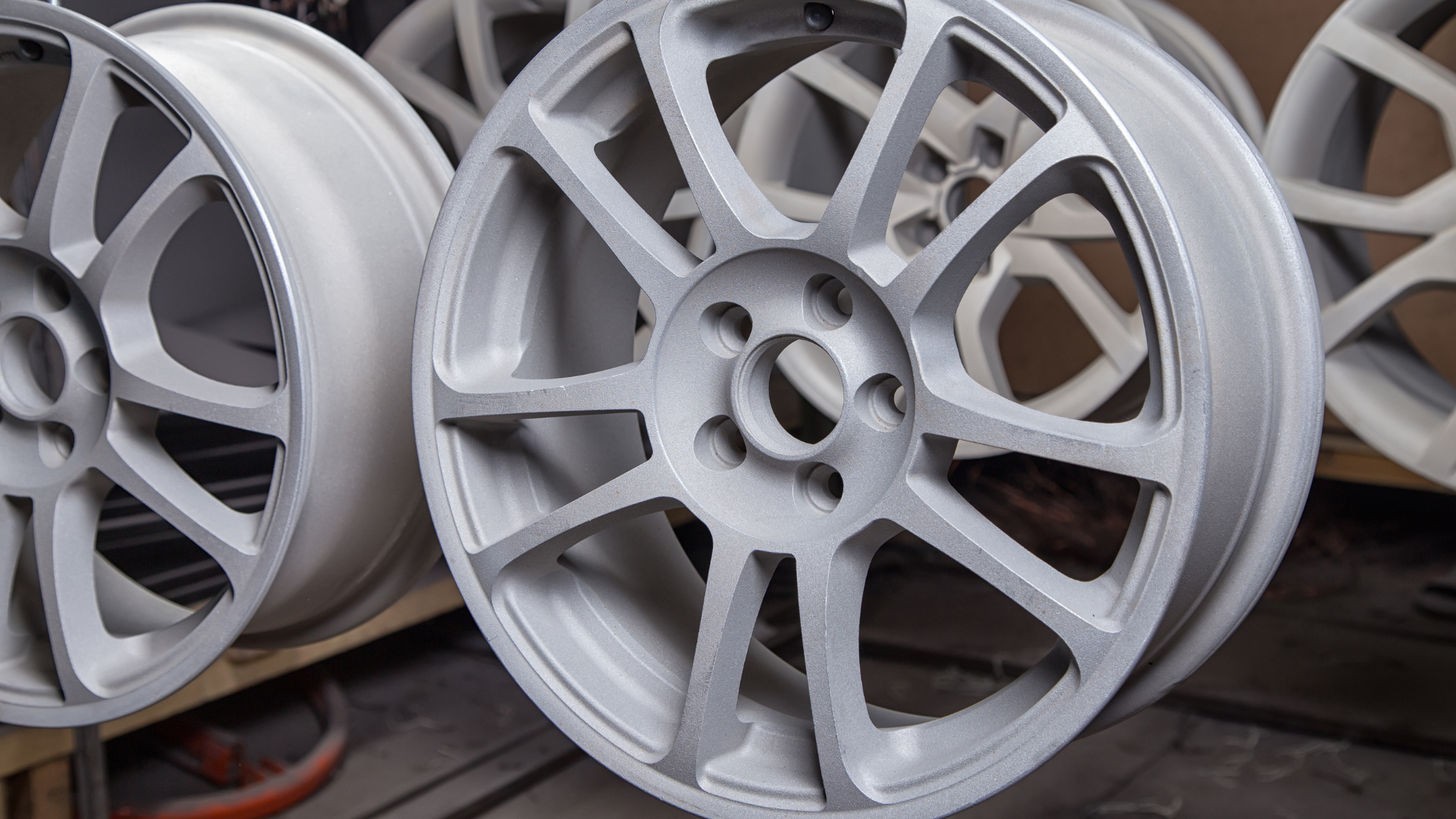
How The Powder Coating Process Works On Aluminum Components
Powder coating aluminum follows a repeatable sequence: clean, pretreat, apply, and cure. Each stage determines final adhesion, appearance, and corrosion performance.
Surface preparation and pretreatment
The part is cleaned to remove oils, oxides, and contaminants, then chemically pretreated—often with a chromate or non-chromate conversion coating—to promote adhesion and add corrosion protection.
Electrostatic application
Charged powder particles are sprayed onto the grounded aluminum part, evenly wrapping the edges and recesses due to electrostatic attraction.
Curing
The coated part is moved to an oven, where heat melts and cross-links the powder into a continuous, hardened film bonded to the substrate.
Powder Coat vs Paint: Key Differences In Durability And Performance
The powder coat vs paint decision comes down to durability, thickness control, and application requirements. Neither is universally better; each wins in specific scenarios.
Durability and finish quality
Powder coating often provides strong resistance to chipping, scratching, and abrasion and can form a uniform film efficiently in a single application; liquid coatings may be preferable where very thin films, complex multilayer systems, or specialized aerospace chemistries are required.
Application and environmental profile
Powder coating uses no solvents and generates little to no VOC emissions, while liquid paints often require solvent-based carriers. Paint, however, offers a wider range of specialized formulations for specific aerospace performance needs.
How Powder Coating Aluminum Performs In Aerospace Operating Environments
Powder-coated aluminum components can perform reliably in selected aerospace environments when the coating system is qualified to the applicable temperature, vibration, corrosion, flammability, contamination, and customer specification requirements. Performance hinges on powder chemistry and pretreatment.
Temperature and mechanical stress
Some cured powder films can tolerate thermal cycling and vibration, but their suitability for interior or secondary-structural aerospace parts must be validated against the applicable engineering specification and qualification tests.
Corrosion and chemical exposure
With proper conversion-coat pretreatment, powder coating provides a durable barrier against moisture and many chemicals, though highly demanding exposures may require specialized paint or plating systems.
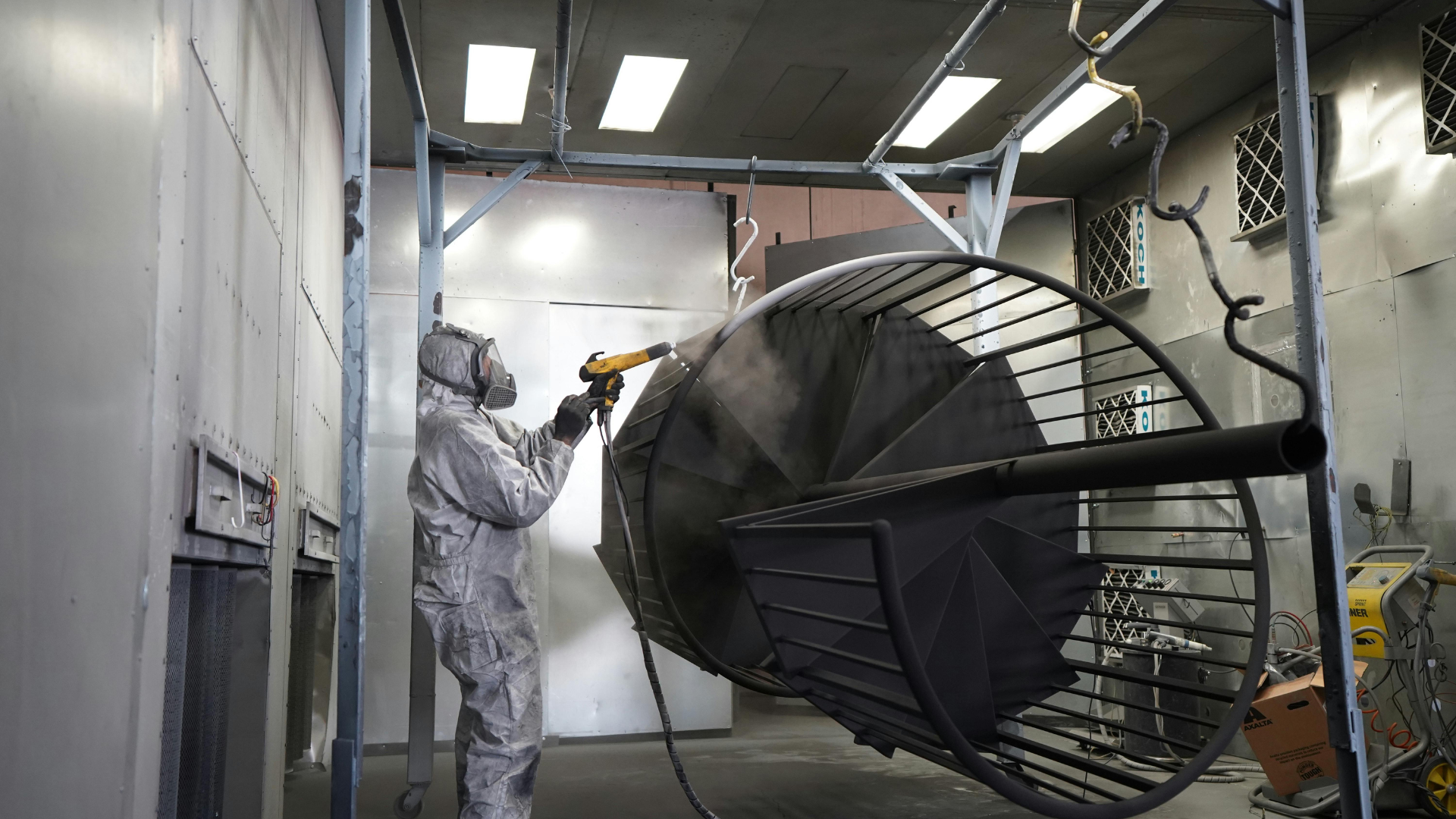
When To Choose Powder Coating Over Traditional Paint Systems
Powder coating is the better choice when durability and coverage consistency outweigh other considerations. It performs well on components exposed to regular handling, abrasion, or impact, where a thicker, more resilient finish extends service life and reduces the frequency of touch-ups. Parts with simple to moderately complex geometries, brackets, housings, ground support equipment, and non-flight-critical structural components are strong candidates, since powder coating delivers uniform coverage without runs or thin spots.
Traditional paint systems remain the better option for components requiring precise dimensional control, flight-critical parts governed by specific aerospace coating specifications, or applications that require color matching, custom branding, or fine surface detail. Paint also allows for easier localized repair and touch-up without the need for specialized curing equipment.
The decision ultimately depends on the component’s operating environment, tolerance requirements, and governing specification, rather than on a general preference for one process over the other.
Specification And Compliance Considerations For Powder Coating Aluminum
Powder coating aluminum aerospace applications requires adherence to specific process and material specifications that govern pretreatment, coating thickness, and performance testing. Compliance is not optional, it is a prerequisite for supplying finished components to aviation, defense, and space programs.
- Pretreatment Requirements: Aluminum surfaces must undergo proper pretreatment, such as chromate conversion coating or anodizing, before powder application to ensure adequate adhesion and corrosion resistance. Specifications often dictate acceptable pretreatment methods based on the component’s end use.
- Coating Thickness Tolerances: Governing specifications define acceptable thickness ranges, since excessive buildup can affect dimensional tolerances on precision-machined parts, particularly around mating surfaces and fastener locations.
- Cure Temperature and Time: Powder coating requires controlled curing at specific temperatures and durations to achieve full cross-linking and coating performance. Deviations can result in reduced adhesion, impact resistance, or premature coating failure.
- Adhesion and Impact Testing: Cross-hatch adhesion testing and impact resistance testing verify that the coating meets minimum performance criteria before parts are released for use.
- Environmental and Salt Spray Testing: Components intended for outdoor or corrosive environments are often subject to salt spray testing to confirm corrosion resistance meets specification requirements.
- Documentation and Traceability: Full lot documentation, including pretreatment records, cure cycle data, and test results, is required to support compliance verification and audit readiness.
To explore the full range of compliant finishing services available across our network, visit our Locations & Compliance Hub.
How Valence Supports Powder Coating Aluminum For Aerospace Applications
We support powder coating aluminum as part of an integrated finishing platform built specifically for aerospace, defense, and space manufacturing, eliminating the vendor fragmentation that slows programs down.
One platform, fewer handoffs
We combine chemical processing, coatings, non-destructive testing, and sub-assembly services under one roof, reducing part travel and operational risk between steps.
The Valence Standard
Every facility operates under our unified quality management system, so you get consistent compliance, audit readiness, and repeatable results across locations and volumes.
Final Thoughts
So, can you powder coat aluminum? Absolutely, and when it’s the right finish, it delivers durability, uniformity, and efficiency that many aerospace parts benefit from. The key is to match the finish to the spec and to execute pretreatment and curing under tight controls. At Valence, we bring that discipline to every part, backing powder coating with integrated processing, unified standards, and the traceability aerospace programs demand.
Frequently Asked Questions: Can You Powder Coat Aluminum? Process, Durability, And Powder vs. Paint For Aerospace Parts
Is it better to paint or powder coat aluminum?
It depends on the part. Powder coating wins on durability, chip resistance, and uniform finish, while paint suits thin films, tight tolerances, and specialized aerospace coating chemistries. Match the choice to your controlling specification.
What is the most durable coating for aluminum?
Powder coating is among the most durable general finishes, offering strong resistance to impacts and abrasion. For extreme corrosion or wear, anodizing or specialty plating may outperform it. The best option depends on the operating environment and spec.
How long will powder coating last on aluminum?
High-performance powder coatings on properly pretreated aluminum can provide long service life, and some architectural systems carry 20-year-type performance claims, but aerospace service life must be established by the controlling specification, operating environment, and qualification data.
Can you paint over powder-coated aluminum?
Yes, but the powder-coated surface must be scuffed and cleaned first to promote adhesion. Compatibility and adhesion should be verified, and aerospace parts must follow approved repair or refinishing procedures. Skipping proper surface prep causes peeling.
Do you need a primer when powder coating?
Not always, many powder coatings bond directly to pretreated aluminum without primer. However, a powder primer can improve corrosion resistance and adhesion in demanding environments or where the controlling spec requires it.
What surface preparation is required before powder coating aluminum?
Aluminum must be cleaned to remove oils and oxides, then chemically pretreated with a chromate or non-chromate conversion coating. Proper prep is essential for adhesion, corrosion resistance, and long-term coating performance.