
Key Takeaways:
- Purpose-Driven Process: Abrasive blasting cleans, strips, and textures aerospace surfaces without adding the controlled compressive residual stress that shot peening delivers.
- Media Matters: The right abrasive material depends on the alloy, geometry, and end use—getting it wrong can lead to embedment, warping, or dimensional loss.
- Spec Discipline: Blasting must be governed by validated parameters, controlled media, and documented inspection to meet aerospace quality requirements.
Not every coating adheres the way it should, and more often than not, the problem starts before the coating is ever applied. Surface condition determines whether a finish bonds properly or fails prematurely, and abrasive blasting is one of the most reliable methods for preparing aerospace parts to meet that standard.
Valence Surface Technologies, the world’s largest independent aerospace surface-finishing company, applies abrasive blasting processes calibrated to the specific requirements of components for aviation, defense, and space programs.
In this piece, we will cover the common abrasive blasting methods used in aerospace manufacturing, how to choose the right media type, how it compares to shot peening, and when to specify it in a component’s process plan.
What Is Abrasive Blasting And Why Is It Used On Aerospace Parts?
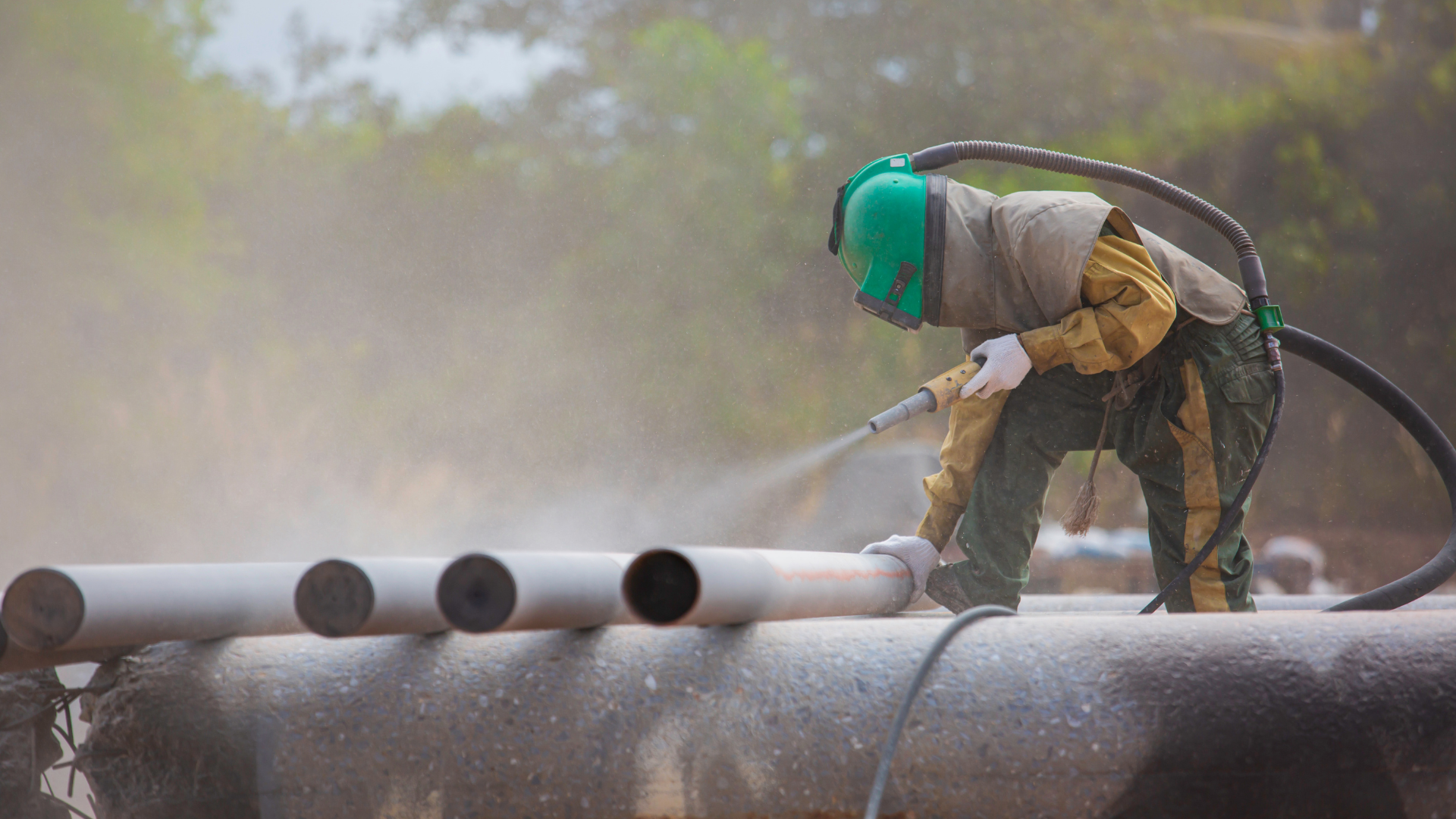
Abrasive blasting is a controlled process that propels media against a part surface to clean, strip, or texture it. In aerospace, it’s a workhorse step that prepares mission-critical components for coating, bonding, and inspection.
The Core Function
The process removes oxides, old coatings, scale, and surface contaminants that would otherwise compromise adhesion or hide defects. It also produces a uniform surface profile—an “anchor pattern”—that helps paints, primers, and specialty coatings bond reliably.
Why It’s Essential in Aerospace
Aerospace parts face demanding service conditions, and surface preparation directly affects coating performance and inspectability. Abrasive blasting delivers repeatable surface conditions that support downstream chemical processing, plating, and non-destructive testing, reducing the risk of coating failure in the field.
Common Abrasive Blasting Methods For Aerospace Applications
Different methods suit different alloys, geometries, and finish requirements. Choosing the right one balances aggressiveness, contamination control, and part sensitivity.
Dry Air Blasting
The most common method, dry blasting, uses compressed air to propel abrasive media. It’s fast and efficient for coating removal and surface prep, but generates dust and requires careful media and parameter control on thin or delicate parts.
Wet and Vapor Blasting
Wet or vapor blasting suspends media in water, cushioning the impact and suppressing dust. This produces a finer, more uniform finish, reduces media embedment, and is well-suited to softer alloys and precision components.
Automated and Robotic Blasting
Robotic and CNC-controlled systems deliver consistent standoff distance, angle, and dwell time across complex or high-volume parts. Automation improves repeatability and traceability, critical for rate-ready aerospace programs.
Media Blasting Aerospace Parts: Choosing The Right Abrasive Material
When media blasting aerospace parts, the abrasive itself is a specification, not an afterthought. Media hardness, shape, and size determine how aggressively material is removed and whether the base alloy stays intact.
Soft Media
Softer media such as plastic media, walnut shell, and sodium bicarbonate are commonly used where coating removal must minimize substrate damage, protecting aluminum, composites, and thin sections from dimensional loss and embedment; final selection must follow the applicable OEM/customer specification.
Hard Media
Aluminum oxide, glass beads, and ceramic grit remove tough oxides and scale, creating a strong anchor profile. These are used on more robust alloys and steel components where an aggressive cut is acceptable.
Matching Media to the Alloy
The base material drives the choice: soft aluminum demands gentler media, while high-strength steels tolerate harder abrasives. Media must also be controlled for cleanliness and contamination, especially avoiding cross-contamination between ferrous and non-ferrous parts.
Abrasive Blasting vs Shot Peening: Key Differences Explained
Abrasive blasting vs shot peening is a common point of confusion because both propel media at a surface, but their purposes are fundamentally different.
Different Objectives
Abrasive blasting is a cleaning and surface-preparation process that removes material. Shot peening is a cold-working process that intentionally deforms the surface to induce compressive residual stress, improving fatigue life and resistance to cracking. While any impact process can locally alter residual stress depending on parameters, abrasive blasting is not specified to produce the controlled, validated compressive stress state required of shot peening.
Different Outcomes
Blasting textures and cleans; peening strengthens. Peening media is round and controlled for size and hardness to deliver a measurable, repeatable intensity, whereas blasting media is chosen for cutting or cleaning action. Using one in place of the other can leave a part unprotected against fatigue or improperly prepared for coating.
When To Specify Abrasive Blasting In An Aerospace Component’s Process Plan
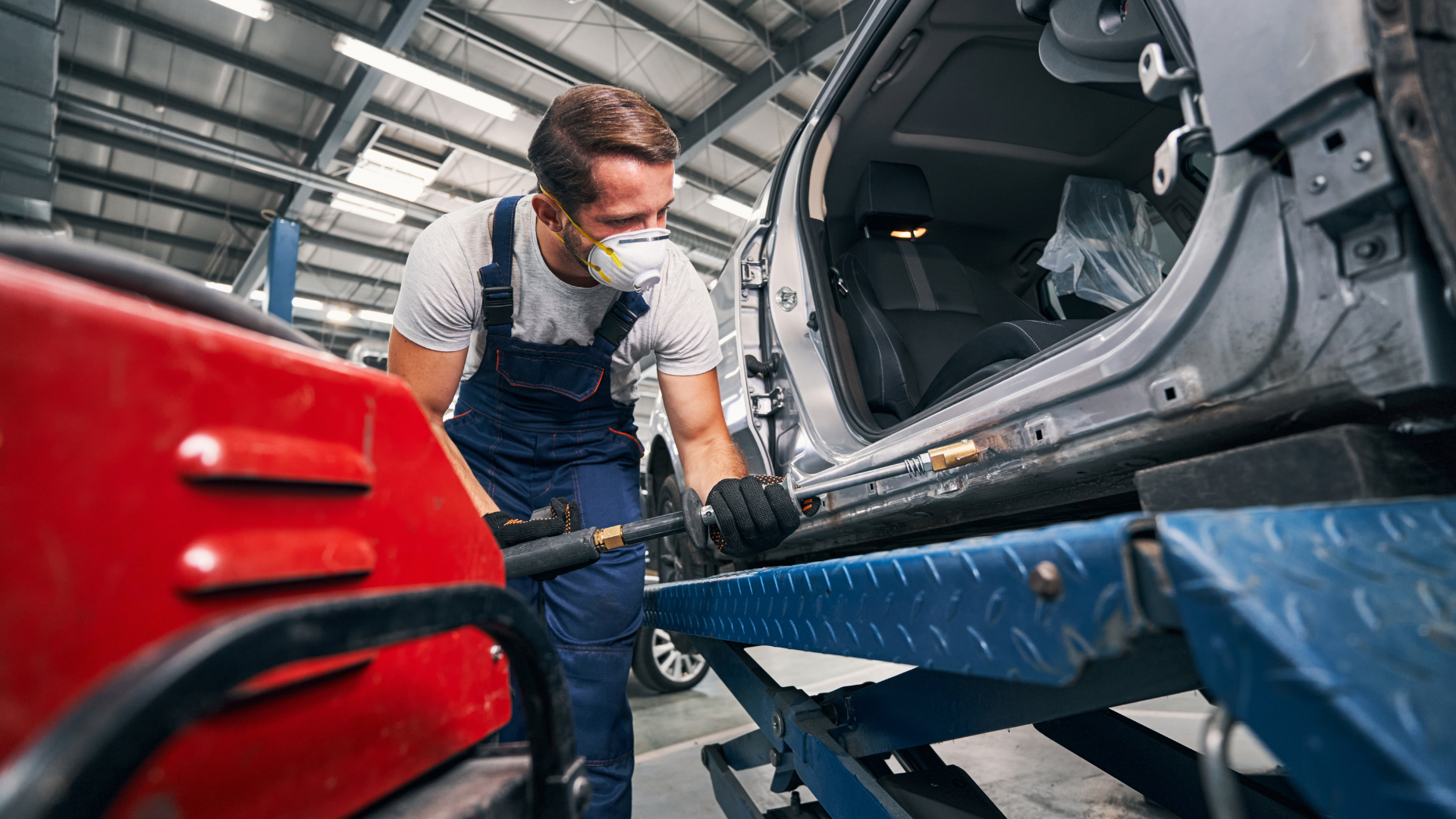
Abrasive blasting should be specified when a part requires cleaning, coating removal, or a controlled surface profile prior to a downstream operation. Placement in the process plan matters as much as the method itself.
Surface Preparation Before Coating
Blasting is commonly specified ahead of painting, priming, plating, or bonding to create the adhesion profile those processes require. Inadequate surface preparation is a common and significant contributor to coating adhesion and corrosion-protection failures.
Coating and Contaminant Removal
When parts require rework, overhaul, or stripping of existing finishes, abrasive blasting may reduce or avoid some chemical-stripper wastes, but it still generates spent media and dust/debris that must be controlled and disposed of appropriately, provided the media and parameters protect the substrate.
When Not to Specify It
If the engineering intent is fatigue improvement or residual stress, shot peening, not blasting, is the correct call. Clear process definitions prevent costly misapplication.
Quality Control And Surface Verification After Abrasive Blasting
Blasting is only as good as its verification. Controlled parameters and documented inspection confirm the surface meets specification before it moves downstream.
Surface Profile and Cleanliness Checks
Inspectors verify surface roughness, cleanliness, and the absence of embedded media or residual contaminants. Profile measurement confirms that the anchor pattern is within the required range for the specified coating.
Process Control and Traceability
Media condition, air pressure, standoff, and dwell time are monitored and recorded to ensure repeatability. Traceable documentation supports audit readiness and ties each part back to validated, in-spec parameters.
How Valence Supports Abrasive Blasting Across Aerospace Manufacturing Programs
We integrate abrasive blasting into a start-to-finish surface finishing platform, so blasting connects seamlessly to plating, coatings, non-destructive testing, and shot peening under one accountable partner.
One Platform, No Handoffs
Because we consolidate fragmented providers into a single unified platform, blasting flows directly into your downstream operations without supplier handoffs, reducing risk and improving consistency across complex programs.
The Valence Standard
Every site operates under the Valence Standard, our unified quality management system ensuring compliance, audit readiness, and consistency company-wide. Our facilities stay rate-ready and audit-ready through continuous investment in technology, workforce, and process control.
To learn more about the facilities delivering these capabilities, explore our Locations & Compliance Hub.
Final Thoughts
Abrasive blasting is a precision-controlled step that quietly protects the performance of nearly every coated aerospace part. Specified correctly, with the right method, the right media, and documented verification, it delivers clean, adhesion-ready surfaces that downstream processes depend on. The key is discipline: knowing when to blast, when to peen, and how to control every parameter in between. That’s the standard we hold across every Valence facility.
Frequently Asked Questions About Abrasive Blasting For Aerospace Parts: Methods, Media Types, And When To Specify It
Which abrasive blasting media is best for aluminum aerospace components?
Softer media like plastic beads, glass beads, or sodium bicarbonate are generally best for aluminum. These minimize substrate cutting, dimensional loss, and media embedment, protecting thin sections while still cleaning or preparing the surface. Final selection depends on the applicable spec and end use.
When should I specify abrasive blasting instead of shot peening for aircraft parts?
Specify abrasive blasting when the goal is cleaning, coating removal, or creating a surface profile for adhesion. Choose shot peening only when the engineering intent is to induce compressive residual stress to improve fatigue life; the two are not interchangeable.
Does abrasive blasting weaken or damage aerospace components?
No, not when properly controlled. With the correct media, pressure, angle, and dwell time, blasting cleans and textures surfaces without damaging the part. Damage—warping, embedment, or material loss—occurs only when parameters or media are mismatched to the alloy.
What is the difference between dry blasting and wet or vapor blasting?
Dry blasting uses compressed air alone, making it fast but dusty and more aggressive. Wet or vapor blasting suspends media in water, cushioning impact, suppressing dust, reducing embedment, and producing a finer, more uniform finish on sensitive parts.
What industry standards and specifications govern abrasive blasting in aerospace?
Abrasive blasting is typically governed by customer-specific and OEM specifications, as well as industry standards such as SAE AMS documents and Nadcap requirements. The exact spec depends on the platform, material, and downstream coating or process being applied.
What safety and quality control measures are required for abrasive blasting?
Required measures include operator protection, dust and media containment, and controlled, monitored process parameters. Quality control covers surface profile and cleanliness verification, media condition checks, and traceable documentation confirming each part meets its specification and audit requirements.