
Key Takeaways:
- Solderability leader: Tin plating is a cost-effective finish for solderability and low-contact-resistance surfaces on electrical components when appropriately designed.
- Whisker risk is real: Pure tin can grow conductive whiskers that threaten flight hardware, requiring deliberate mitigation strategies.
- Specification matters: Choosing between matte tin, bright tin, or tin-lead depends on the application, standard, and reliability requirements.
Should you specify tin plating for your next aerospace program? The answer depends on whether solderability and corrosion resistance outweigh the well-documented risk of tin whiskers, tiny conductive filaments that can short-circuit flight-critical hardware.
At Valence, we operate an integrated surface finishing platform for aerospace, defense, and space manufacturing, consolidating 300+ years of combined finishing expertise across 12 facilities. We process over 25 million parts annually and support nearly all major commercial and military aerospace platforms, which means we’ve seen exactly where tin plating belongs, and where it doesn’t.
In this piece, we’ll cover how tin plating works, its corrosion and whisker behavior, the standards that govern it, and when it’s the right call.
What Is Tin Plating And How Does It Work?
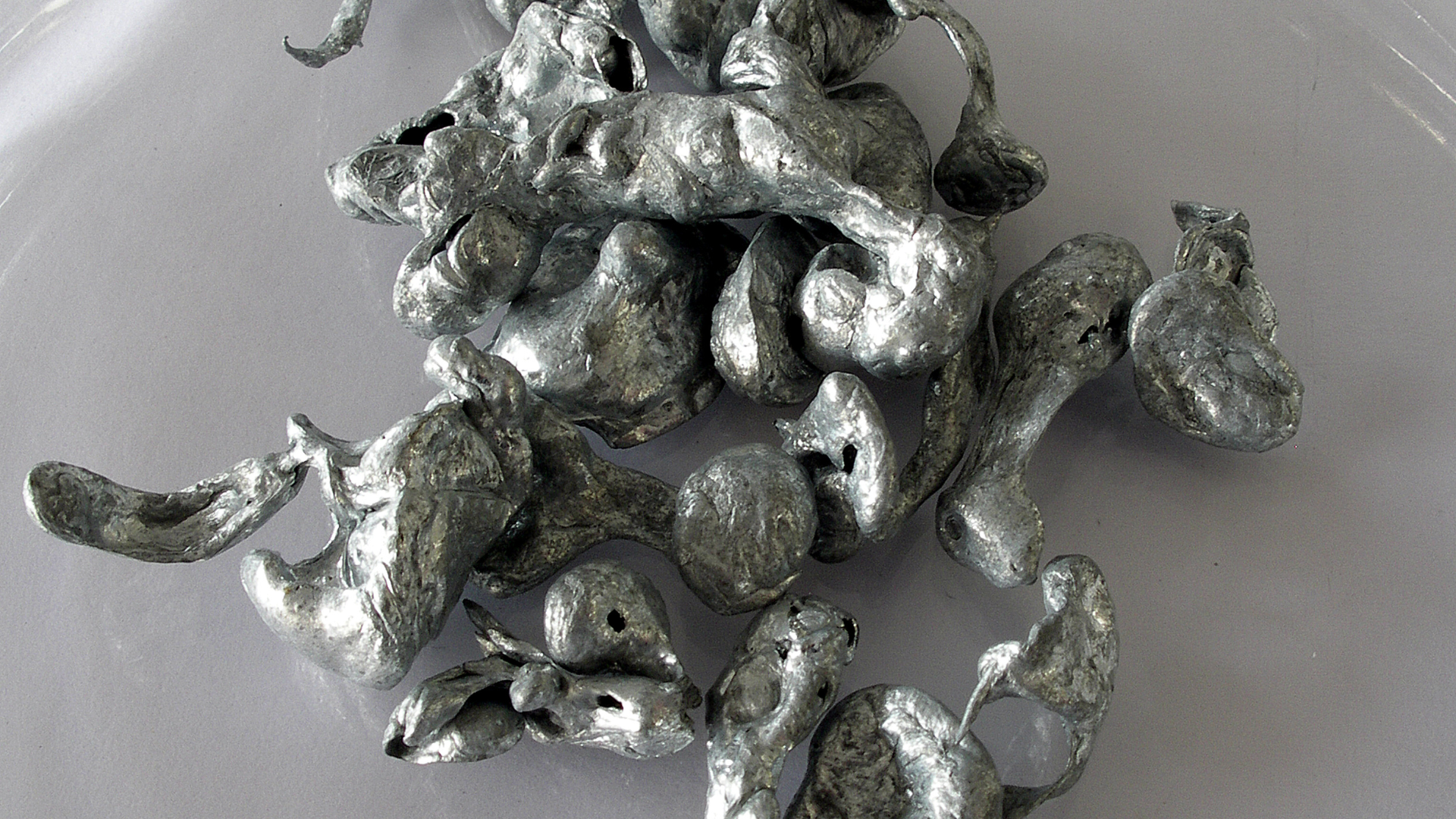
Tin plating deposits a thin layer of tin onto a base metal via electroplating, in which the part is submerged in a tin-bearing electrolyte and an electric current drives tin ions onto the surface. The result is a soft, ductile, corrosion-resistant coating prized for its solderability and electrical conductivity.
Tin is popular because it’s relatively nontoxic in its metallic form, relatively inexpensive, and bonds well to common substrates such as copper, brass, and steel. Aluminum requires a qualified pretreatment and plating sequence; zincating may precede nickel underplating, with the complete sequence depending on the alloy and process specification. The plating thickness, deposit structure (matte versus bright), and any underlayers are all specified based on the part’s function and reliability demands.
Corrosion Resistance Properties Of Tin Plating In Aerospace
Tin plating protects base metals by forming a barrier that resists oxidation and corrosion in many environments, making it a practical choice for connectors, terminals, and conductive hardware exposed to moisture or handling.
How Tin Protects The Base Metal
Tin acts primarily as a barrier coating, shielding the underlying metal from oxygen and moisture. However, its surface oxide can increase contact resistance; reliable tin-plated contacts require suitable contact force, wiping action, and control of micromotion.
Environmental Limits To Consider
Tin performs well under defined exposure conditions but has limitations, and ASTM B545 warns that outdoor exposure can cause corrosion. Suitability depends on exposure conditions, substrate, coating integrity, and qualification testing; corrosion protection should not be promised from finish selection alone.
Understanding Tin Whisker Risk In Flight Hardware
Tin whiskers are the single biggest reason engineers hesitate to specify pure tin on flight hardware. These are hair-like, electrically conductive filaments that spontaneously grow on tin surfaces and can bridge conductors, causing intermittent faults or catastrophic short circuits.
What Drives Whisker Growth
Compressive stress within the tin deposit is a major driving factor, though the mechanisms are not fully predictive. This stress can come from the plating process, intermetallic compounds, thermal cycling, or mechanical pressure. Because whiskers can emerge months or years after plating, initial inspection cannot establish lifetime freedom from whiskers.
Why It Matters For Aerospace
In densely packed avionics and electrical assemblies, even a filament a few millimeters long can bridge a gap and short a circuit. Given the consequences of failure in flight-critical systems, whisker risk demands proactive mitigation rather than after-the-fact detection.
Tin-Lead Plating As A Whisker Mitigation Strategy
Tin-lead plating remains among the most proven defenses against tin whiskers, which is why it holds a lasting place in aerospace despite broader industry moves toward lead-free finishes.
How Lead Suppresses Whiskers
Tin-lead finishes substantially reduce whisker propensity. Specify composition by weight and the governing material specification rather than treating 90/10 or 60/40 as universal aerospace defaults; suppression is strong but not an absolute guarantee.
The RoHS Context
Some aerospace, military, and space equipment falls outside the EU RoHS scope under Article 2(4). For equipment within scope, lead use requires an applicable exemption or other compliant basis. Applicability must be assessed for the particular product rather than assumed from aerospace association.

Specifications And Standards That Govern Aerospace Tin Plating
Aerospace tin plating is controlled by industry and military specifications that define composition, thickness, adhesion, and testing, removing ambiguity and ensuring repeatable, qualifiable results.
Common Governing Specifications
ASTM B545 covers electrodeposited tin. Legacy drawings may reference the canceled MIL-T-10727, superseded in 1997; follow the contract and obtain customer authorization before changing a drawing’s specification. SAE AMS-P-81728 covers electrodeposited tin-lead plating, while GEIA-STD-0005-2 establishes whisker-risk mitigation processes rather than a universal plating recipe.
Why Conformance Is Non-Negotiable
Each specification dictates deposit thickness, underlayer requirements, and acceptance testing. Meeting them isn’t just about performance; it’s about traceability and audit readiness, which are essential when parts feed into flight-critical assemblies. Specify the contractually required revisions.
When To Specify Tin Plating — And When To Choose An Alternative
Specify tin plating when you need cost-effective solderability, good conductivity, and moderate corrosion protection, but reach for an alternative when whisker risk, extreme environments, or wear resistance dominate the requirements.
Good Fits For Tin Plating
Tin can be a suitable choice for electrical contacts, bus bars, terminals, and EMI shielding where solderability and conductivity are priorities and the design controls contact conditions. For flight hardware, tin-lead is the safer variant when whisker risk is a factor.
When To Consider Alternatives
For high-temperature exposure, heavy wear, or greater corrosion resistance, nickel, silver, or gold plating may be preferable, depending on the coating architecture, corrosion behavior, and mating conditions. The right answer depends on the operating environment, mating materials, and reliability targets, decisions best made early in the design phase.
How Valence Supports Aerospace Tin Plating Programs
We built our platform to reduce vendor fragmentation in aerospace surface finishing, so tin plating programs run predictably from specification through delivery.
Integrated, Audit-Ready Processing
Valence offers integrated finishing services, including tin and tin-lead plating alongside non-destructive testing, chemical processing, painting, and shot peening, across its network, subject to site-specific capabilities and customer approvals.
To see the full scope of what we offer, explore our Valence Services Overview and find the capabilities that align with your program requirements.
Built To Scale And Reduce Risk
With 750,000+ sq ft of capacity and support for nearly every major aerospace platform, we’re rate-ready by design. We help you consolidate suppliers, shorten lead times, and de-risk finishing on the parts that matter most.
Final Thoughts
Tin plating earns its place in aerospace through solderability, conductivity, and reliable corrosion protection, but it carries a whisker risk that demands informed specification. For flight-critical hardware, tin-lead often wins on reliability, while alternatives make sense in harsher environments. The key is deciding early, specifying to the right standard, and partnering with a finisher who can execute at scale. That’s exactly what we do at Valence.
Frequently Asked Questions About Tin Plating For Aerospace
What causes tin whiskers on plated aerospace components?
Tin whiskers are driven mainly by internal compressive stress in the tin deposit, arising from intermetallic growth, thermal cycling, mechanical pressure, and plating conditions, though the mechanisms are not fully predictive. This stress pushes conductive filaments out of the surface, sometimes months or years after plating.
What is the best plating option for solderability on aluminum bus bars?
Aluminum requires a qualified pretreatment and plating sequence; zincating may precede nickel underplating, and tin or tin-lead may provide a solderable final surface, subject to program requirements. For flight hardware, tin-lead is often preferred to reduce whisker risk.
How does tin plating improve corrosion resistance for aerospace components?
Tin plating forms a barrier layer that shields the base metal from oxygen and moisture. However, its surface oxide can increase contact resistance, so reliable contacts require appropriate contact force and control of micromotion.
What is the difference between bright tin and matte tin for solderability?
Bright tin is particularly susceptible to whiskers, while matte tin may reduce risk relative to some bright-tin processes but remains whisker-prone; its use requires process-specific qualification and program approval.
What are the different types of tin plating?
Tin electrodeposits can be matte, bright, or flow-brightened; tin-lead is a separate alloy finish.
What is the difference between dendrites and tin whiskers?
Tin whiskers are single conductive filaments that grow from internal stress without needing moisture or voltage. Electrochemical-migration dendrites are branching, tree-like structures that form in the presence of moisture and an applied voltage bias.