
Key Takeaways:
- Thickness Sets Them Apart: Type II typically runs 0.00007–0.0010 in., while Type III hard coat anodizing runs thicker, roughly 0.0005–0.0045 in., with a default nominal thickness of 0.002 in. unless otherwise specified.
- Application Drives Choice: Choose Type II for corrosion protection and paint adhesion; choose hard coat anodizing for wear and abrasion resistance. Specify the sealing condition explicitly, as maximum abrasion resistance and enhanced corrosion protection can require different finishing conditions.
- Compliance Is Non-Negotiable: Aerospace programs require processes controlled to MIL-PRF-8625 and program-specific specs, with recordkeeping following the applicable specification and quality system.
The wrong anodizing choice can ground a part before it ever reaches assembly. Selecting between sulfuric acid anodizing and hard coat anodizing isn’t a finish-line decision; it determines wear life, dimensional fit, and whether a component passes qualification.
At Valence, we operate a purpose-built aerospace surface-finishing platform that supports nearly every major commercial and military aerospace program. Our teams process anodized parts to tight specifications, from precision components to large aerostructures.
In this piece, we’ll cover how each process works, where they differ in performance, which applications require hard-coat anodizing, and how to match the right process to your program requirements.
What Is Sulfuric Acid Anodizing And How Does It Work?
Sulfuric acid anodizing, classified as Type II under MIL-PRF-8625, is an electrochemical process that forms a controlled layer of aluminum oxide using a sulfuric acid electrolyte. The part serves as the anode, and the applied current drives oxygen to the surface, converting the outer aluminum into a porous, corrosion-resistant oxide.
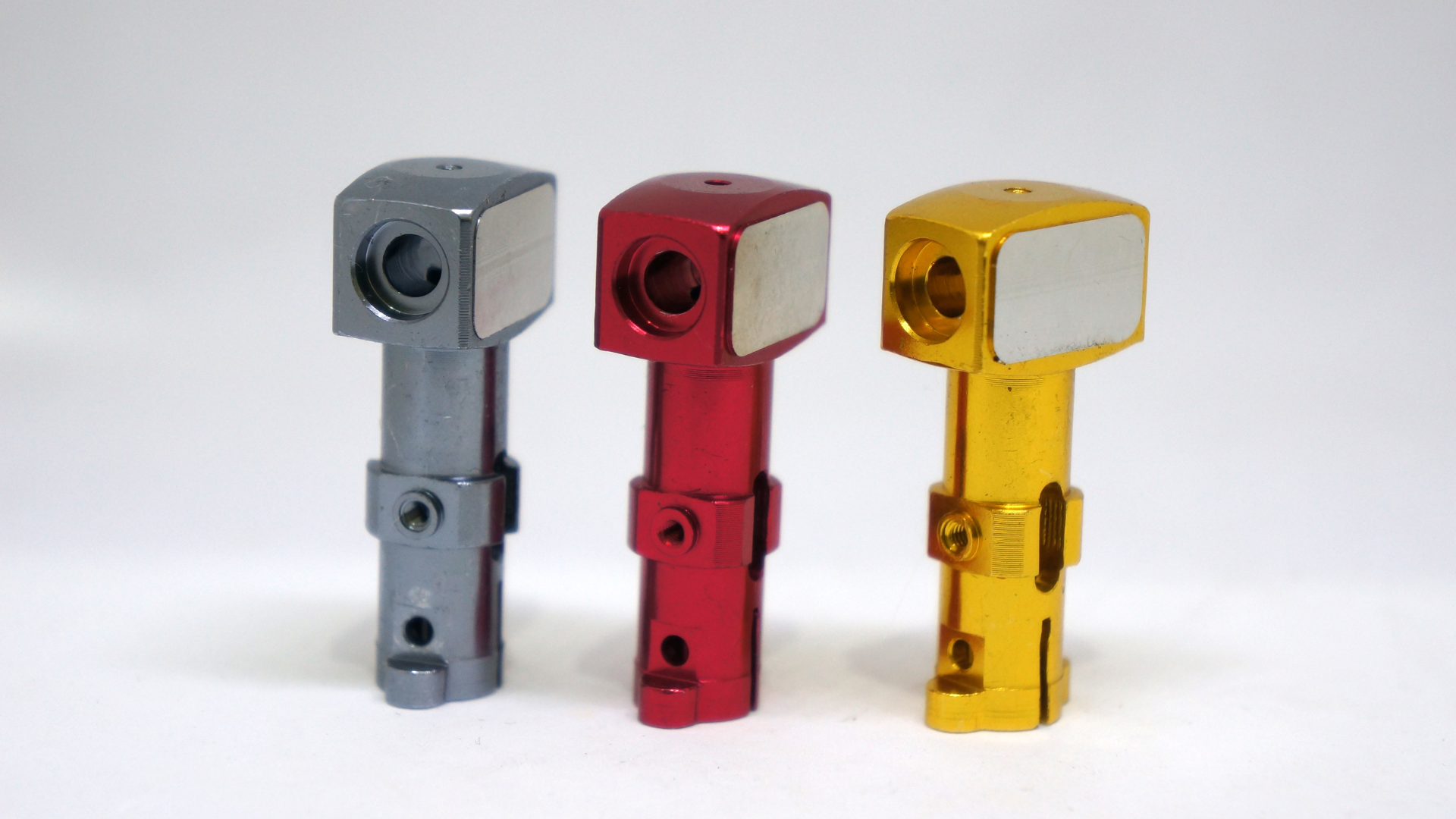
The resulting coating is thin, typically ranging from 0.00007 to 0.0010 inches. Its porous structure accepts dyes and can provide a paint base when its preparation and sealing conditions match the coating system.
In aerospace, Type II is common for parts where weight, appearance, corrosion resistance, and paint bonding matter more than heavy-wear resistance, such as brackets, housings, fasteners, and interior structural components.
What Is Hard Coat Anodizing And How Is It Different?
Hard coat anodizing, or Type III, commonly uses a sulfuric acid-based chemistry under tighter process control to build a far more durable coating. The difference lies in how the oxide layer is grown and what that layer can withstand.
The Process Behind Hard Coat Anodizing
Type III commonly runs at lower electrolyte temperatures and higher current densities than Type II. This produces a denser, thicker oxide layer that integrates more deeply into the base aluminum, with approximately 50% penetrating into the base aluminum and 50% building outward on the surface.
How It Differs From Type II
The key distinction is performance. Hard coat anodizing delivers greater thickness, a harder ceramic surface, and superior abrasion and wear resistance, at the cost of tighter dimensional control and reduced flexibility for decorative finishing.
Key Performance Differences: Hardness, Thickness, And Wear Resistance
Type II and Type III diverge sharply in mechanical performance. These three factors drive nearly every process selection decision.
Hardness
Type III produces a harder surface than Type II, approaching the hardness of hardened tool steel. However, hardness alone does not establish wear resistance, and the softer aluminum substrate can yield beneath the hard coating.
Thickness
Type II coatings are thin, generally 0.00007–0.0010 inches; Type III runs thicker, commonly 0.0005–0.0045 inches, with these ranges overlapping. Thickness is controlled precisely because it directly affects fit and function.
Wear And Abrasion Resistance
This is where hard coat anodizing earns its place. Type III is engineered for abrasion resistance, dramatically outperforming Type II in high-friction, sliding-contact, and abrasive environments. Thickness alone does not establish hardness or service life; alloy and finishing conditions also influence performance.
Which Aerospace Applications Call For Hard Coat Anodizing?
Hard coat anodizing is specified when a part is subject to mechanical wear, friction, or dimensional demands that Type II anodizing cannot meet.
Moving And Load-Bearing Components
Parts in sliding or rotating contact benefit from Type III. Hydraulic pistons, valve bodies, actuator components, gears, and cams are potential applications, not automatic selections; hard anodizing may reduce fatigue strength, which is relevant to cyclically loaded structures.
Wear-Prone Aerostructures And Hardware
Components exposed to repeated abrasion, fretting, or contact loading, such as guide rails, bushings, and structural interfaces, are candidates for hard-coat anodizing and are subject to fatigue and qualification review.
When Corrosion Protection Alone Suffices
If a part requires corrosion resistance and paint adhesion without heavy wear, Type II is often suitable.
Specification And Compliance Considerations For Aerospace Programs
In aerospace, the process is only as good as its documentation and control.
Governing Specifications
MIL-PRF-8625 (Revision F with Amendment 2) is the primary specification, defining Type II (sulfuric) and Type III (hard) coatings, with Class 1 (nondyed) and Class 2 (dyed) finishes. Follow the revision actually invoked by the contract. Many programs layer additional prime and OEM specifications on top.
Process Control And Traceability
Bath chemistry, temperature, current density, and thickness must be controlled and recorded. Recordkeeping scope follows the applicable specification, customer requirements, and quality system.
Dimensional And Design Coordination
Because Type III builds measurable thickness, engineering must account for coating growth early in tolerancing, masking, and fixturing. The ~50% penetration/50% buildup approximation is not a guaranteed machining allowance and should be coordinated with the anodizer.
How To Evaluate The Right Anodizing Process For Your Program Requirements
Selecting between sulfuric acid anodizing and hard coat anodizing comes down to matching the coating’s performance profile to the component’s actual operating conditions and program constraints. Consider the following factors before specifying either process:
Define The Functional Load
Start with how the part behaves in service. If it experiences wear, friction, or contact loading, Type III is the likely answer; if the priority is corrosion protection or paint base, Type II fits.
Account For Dimensional Tolerances
Confirm whether the part can accommodate Type III thickness growth. Machining is generally performed before anodizing, though controlled hardcoat lapping or honing is permitted with applicable engineering authorization.
Confirm Specification Alignment
Verify which prime, OEM, and military specs apply, then confirm your finishing partner is qualified and audit-ready for those exact requirements.
Why Valence Is The Trusted Partner For Aerospace Anodizing Programs
We built our platform to remove surface finishing from the supply chain bottleneck, and anodizing is central to that mission. To explore the full range of what we bring to your program, visit our Valence Services Overview.
Technical Mastery Across Both Processes
We run Type II and Type III anodizing to tight aerospace specifications. Our teams have more than 300 years of combined experience finishing mission-critical and flight-critical parts.
Consistency Through A Common Quality System
Our unified quality management system delivers consistent compliance and audit readiness across our facilities.
Integrated, Scalable Capacity
Supporting 3,000+ customers, we combine anodizing with NDT, chemical processing, plating, coatings, and shot peening, reducing handoffs and giving you one accountable, rate-ready partner.
Final Thoughts
The choice between sulfuric acid anodizing and hard-coat anodizing is a performance decision with compliance implications. Type II protects and prepares surfaces; Type III hard coat anodizing hardens and extends the life of wear-critical components. Get the functional load, dimensional impact, and specification requirements right early, and qualification becomes far smoother.
Frequently Asked Questions About Sulfuric Acid Anodizing vs. Hard Anodizing
What is the 720 rule for anodizing?
The 720 rule estimates anodizing time: time in minutes ≈ (720 × thickness in mils) ÷ current density in A/ft². It helps set current and dwell time, but does not replace coating-thickness verification.
Does sulfuric acid damage aluminum?
In controlled anodizing, sulfuric acid is the electrolyte used to form a protective oxide layer rather than corroding the metal. Proper controls reduce, but do not eliminate, chemical attack and processing-defect risks such as trapped electrolyte, contamination, and improper racking.
What is the difference between Type II and Type III anodizing thickness?
Type II sulfuric anodizing typically produces coatings of 0.00007–0.0010 inches, while Type III runs thicker, roughly 0.0005–0.0045 inches, with a default nominal thickness of 0.002 in. unless otherwise specified.
What is the best anodizing process for wear-resistant aerospace parts?
Type III hard coat anodizing is often suitable for wear-resistant aerospace parts. Its thick, dense oxide layer resists abrasion, galling, and friction, though verified coating performance and fatigue considerations should guide selection.
Does Type III hard anodizing affect the dimensional tolerances of aerospace components?
Yes, Type III builds measurable thickness, with approximately 50% of the growth outward per surface, as an approximation. Engineers must account for this growth through tolerancing, masking, or authorized post-process finishing.
Which aerospace standards and specifications apply to Type II and Type III anodizing?
MIL-PRF-8625 is the primary specification defining both Type II (sulfuric) and Type III (hard) anodizing, including class and dye options. Programs often add prime contractor and OEM specifications with additional testing and traceability requirements.