Key Takeaways:
- Different Scope: AS9100 certifies your quality system within its defined scope; Nadcap accredits the specific critical processes you actually perform.
- Often Both: When customer requirements call for it, suppliers need an AS9100-certified QMS plus Nadcap for specified work.
- Confirm the Route: Nadcap requires an acceptable quality system, but AS9100 is not always mandatory; an AC7004 audit is an alternative.
AS9100 and Nadcap are both aerospace certifications, so why do so many suppliers treat them as interchangeable? Confusing the two can leave your program exposed to compliance gaps, failed audits, and supply chain disruptions that could have been avoided. They are not the same standard, and understanding the difference is non-negotiable for any serious aerospace supplier.
At Valence, we operate under both AS9100 and NADCAP accreditation across our facility network, giving us firsthand insight into what each standard demands and how they work together in a real production environment.
In this piece, we’ll break down what AS9100 requirements cover, how Nadcap differs, and what aerospace suppliers actually need to have in place to stay compliant and competitive.
What Are AS9100 Requirements And Why Do They Matter For Aerospace Suppliers?
AS9100 requirements define the quality management system a supplier must maintain to serve the aerospace, defense, and space sectors. Many aerospace customers use AS9100 certification as a supplier-qualification requirement before issuing work.
What AS9100 Actually Covers
AS9100D is a Quality Management System (QMS) requirements standard published on September 20, 2016. It incorporates ISO 9001:2015 and additional aviation, space, and defense requirements, adding aerospace-specific controls such as operational risk management, counterfeit parts prevention, configuration management, and product safety.
Why It’s the Baseline for Doing Business
AS9100 certification demonstrates that an organization has implemented a QMS that meets the requirements of the aerospace industry within the scope of its certificate. For supply chain leaders, that framework supports cleaner audits and dependable program continuity.
What Is Nadcap Accreditation And How Does It Differ From AS9100?
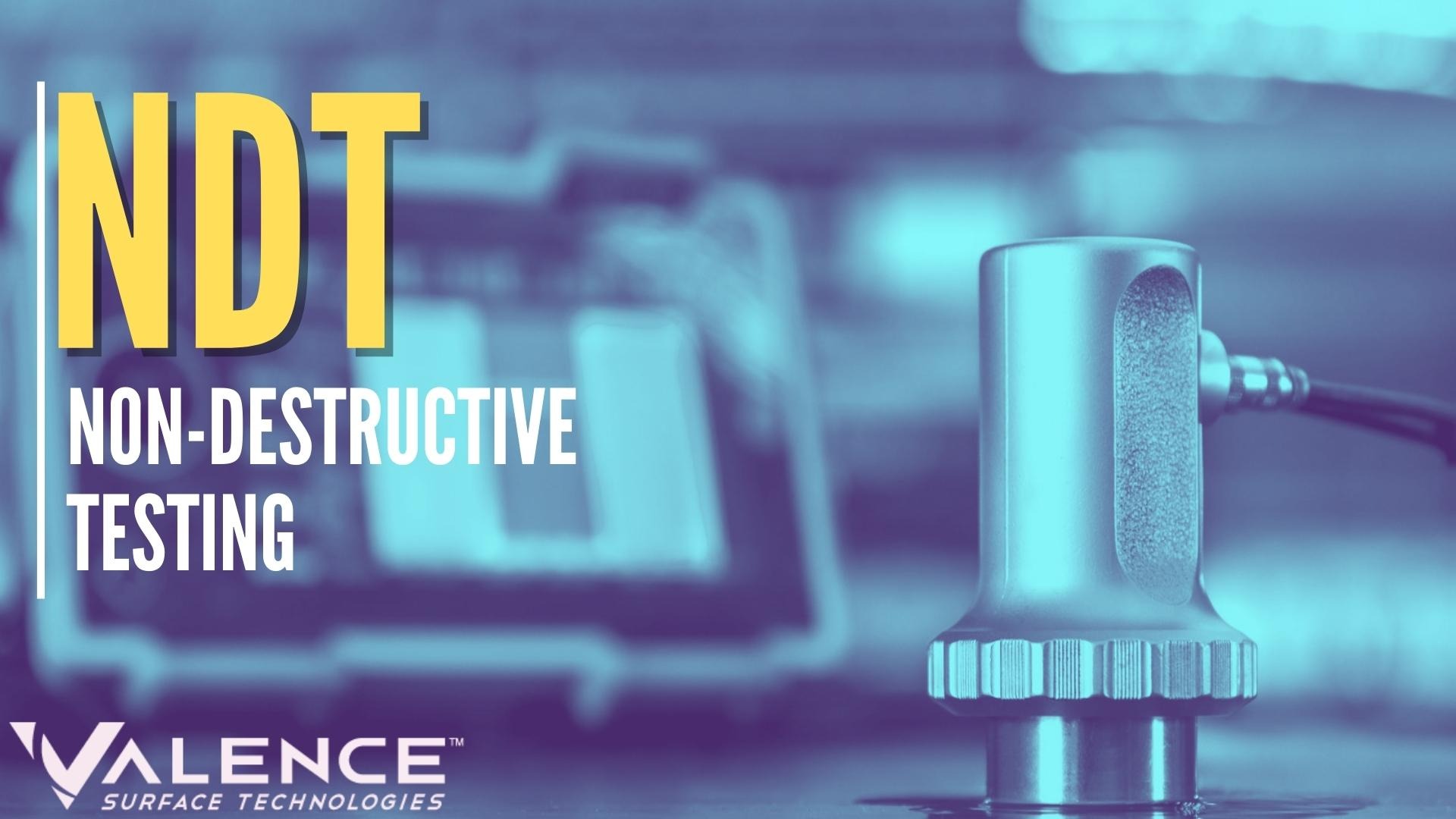
Nadcap (National Aerospace and Defense Contractors Accreditation Program) is an industry-managed accreditation program that evaluates special processes used in aerospace and defense manufacturing. Administered by the Performance Review Institute (PRI), Nadcap accreditation signals that a supplier’s processes, such as chemical processing, heat treating, or NDT, meet the rigorous technical standards required by major aerospace primes and OEMs.
Unlike general quality certifications, Nadcap focuses specifically on the process itself, not just the management system around it.
How Does It Differ From AS9100?
Both are critical to aerospace supply chain compliance, but they serve different purposes:
- AS9100 is a quality management system (QMS) standard. It governs how a company plans, executes, and controls its overall operations, covering everything from document control to risk management and customer communication.
- Nadcap is a process-specific accreditation. It verifies that individual specialized processes, such as nickel plating or anodizing, are performed correctly and consistently at the technical level.
Think of AS9100 as the framework for how a facility operates, and Nadcap as proof that a specific process within that facility meets aerospace standards.
AS9100 vs. Nadcap: Key Differences In Scope And Purpose
These two credentials measure very different things, and confusing them can cost you a contract. Aerospace buyers expect suppliers to understand both.
Scope: System-Wide vs. Process-Specific
AS9100 certifies your company’s overall QMS within its defined scope, whereas Nadcap is a process-level accreditation rather than a company-wide quality system.
Purpose: Framework vs. Technical Validation
They serve complementary roles. AS9100 provides the quality framework; Nadcap validates the technical work performed inside it. Nadcap audits go deeper into technical execution, verifying conformity with requirements established by subscribing OEMs such as Boeing, Lockheed Martin, and Northrop Grumman.
Do Aerospace Suppliers Need Both AS9100 And Nadcap Accreditation?
Suppliers may need both credentials when customer requirements call for an AS9100-certified QMS and Nadcap accreditation for specified work. Requirements depend on the customer, supplier role, process, and contract.
When Both Are Required
If you perform work like plating, NDT, coatings, or heat treatment, customers will be specific about which special processes require Nadcap accreditation. Major aerospace manufacturers publish separate QMS, approved-process-source, Nadcap, and purchasing requirements, so confirm applicable requirements rather than assuming every supplier needs the same credentials.
The Required Sequence
Nadcap requires an acceptable quality system, but AS9100 certification is not always mandatory. Depending on applicable requirements, suppliers may use recognized certification or undergo a Nadcap Aerospace Quality System audit to AC7004. Confirm the appropriate route with PRI and your customer.
How AS9100 Requirements Apply To Surface Finishing And Metal Processing
In surface finishing, AS9100 requirements govern the QMS wrapping every job, while Nadcap accredits the individual critical processes that touch flight-critical parts.
Where the Two Intersect
Surface finishing sits squarely in Nadcap territory. AS9100 establishes QMS controls for competence, documented information, and applicable traceability requirements; process specifications, Nadcap criteria, and customer requirements add detailed technical and qualification controls.
Why This Matters for Flight-Critical Parts
Accreditation confirms that processes are controlled in accordance with applicable engineering requirements. For components where a hidden defect can’t be caught by final inspection, system-level discipline and process-level validation together support program reliability.
Common Misconceptions About AS9100 And Nadcap Compliance
Compliance certifications are often misunderstood, even by experienced procurement and engineering teams. Here are some of the most common misconceptions worth clearing up:
“AS9100 and Nadcap cover the same thing”
They don’t. AS9100 certifies a company’s quality management system, how it operates, documents, and controls processes at an organizational level. Nadcap certifies specific special processes at a technical level. A facility can hold AS9100 without Nadcap accreditation, but most aerospace primes require both.
“Nadcap accreditation is a one-time achievement”
Nadcap accreditation requires periodic audits, typically every 12 to 18 months, with high-performing suppliers earning extended intervals. It is an ongoing commitment, not a credential earned once and carried indefinitely.
“Any certified supplier meets our program requirements”
Not necessarily. Nadcap accreditation is process-specific and commodity-specific. A supplier accredited for chemical processing may not hold accreditation for heat treating or NDT. Always verify that a supplier’s accreditation covers the exact process your program requires.
“AS9100 certification guarantees product quality”
AS9100 ensures a structured, auditable quality system is in place, but it does not directly guarantee the quality of any individual part or coating. Process-level accreditations like Nadcap provide that additional layer of technical assurance.
“Smaller suppliers don’t need Nadcap”
Program size doesn’t determine compliance requirements; the nature of the process does. If a special process is being performed for an aerospace prime, Nadcap accreditation is typically expected regardless of supplier size.
How Valence Maintains AS9100 And Nadcap Compliance Across Its Facilities
At Valence Surface Technologies, we operate a network of aerospace surface-finishing facilities with AS9100 certification and Nadcap accreditations across processes such as NDT, chemical processing, plating, coatings, and shot peening. Certifications, accreditations, and customer approvals vary by location and process.
To get a full picture of what we offer across our network, explore our Valence Services Overview. Certifications, accreditations, and customer approvals vary by location and process.
One Standard, Every Location
At Valence, we operate under a unified quality management system, the Valence Standard, applied consistently across every facility in our network. Consolidating compatible work with us may simplify supplier coordination, subject to facility capabilities, approvals, capacity, and your program requirements.
Consolidation That Removes Risk
Instead of managing fragmented vendors, you get one integrated partner that covers multiple accredited processes under a common QMS, potentially reducing the number of suppliers you coordinate with.
Final Thoughts
AS9100 requirements and Nadcap accreditation aren’t competitors; they’re two layers of complementary assurance. AS9100 certification and Nadcap accreditation provide complementary evidence of quality-system and technical-process controls; neither guarantees defect-free output nor independently establishes a component’s airworthiness. Suppliers who understand the distinction move through qualification more smoothly. If your program depends on surface finishing, partnering with a provider holding both credentials removes a source of supply chain risk.
Frequently Asked Questions About AS9100 vs. Nadcap: What Aerospace Suppliers Actually Need to Know
Do I need AS9100 or Nadcap for my aerospace supply chain?
Often both. AS9100 covers your quality system; Nadcap accredits the specific critical processes, like plating or NDT, that your contracts require.
What is the difference between a quality certification and a process accreditation?
AS9100 certification validates your company’s overall QMS within its scope, while Nadcap accreditation validates specific critical processes.
Can I get Nadcap accreditation without AS9100 certification?
Sometimes. Nadcap requires an acceptable quality system, but AS9100 is not always mandatory; suppliers may undergo a Nadcap Aerospace Quality System audit to AC7004. Confirm the route with PRI and your customer.
How long does it take to get Nadcap accreditation?
Timing depends on readiness, scope, auditor availability, and closure of corrective actions. Most Nadcap audits occur three to six months after scheduling, which is not the full preparation-to-accreditation period. Obtain a project-specific estimate from PRI.
How long does it take to get AS9100 certification?
Timing depends on readiness and scope. Obtain a project-specific estimate from your certification body; organizations already ISO 9001-certified may transition more quickly since foundational elements are in place.
How do I know if my customers or prime contractors require AS9100, Nadcap, or both?
Review contracts, purchase orders, incorporated quality clauses, specifications, and approved-source requirements. Ask the customer to resolve any uncertainty before accepting the work.