
Key Takeaways:
- Aerospace-Only Since 2021: ASTM E1444/E1444M replaced MIL-STD-1949 and now covers only wet fluorescent testing for aerospace, with general industry moved to ASTM E3024.
- Verified Equipment Daily: System performance must be checked with an AS5282 tool steel ring, and UV-A lamps now require daily integrity checks.
- Evaluate Before Demagnetizing: Indications must be evaluated before demagnetization, and a Level 3 sets magnetizing current using sample parts or quantitative quality indicators.
A fatigue crack on a landing gear or engine component may measure only a fraction of a millimeter at the surface, yet it can grow with every load cycle the part sees in service. Magnetic particle testing is one of the primary methods aerospace manufacturers use to detect discontinuities in ferromagnetic parts, and ASTM E1444/E1444M defines the minimum controls required to make the method dependable.
Nondestructive testing is a core capability across the Valence network, where magnetic particle inspection runs alongside fluorescent penetrant, eddy current, and the finishing processes that follow. Our teams inspect to the requirements of nearly every major commercial and military aerospace platform.
This article explains the scope of the practice, the requirements it imposes on inspection suppliers, and where testing fits within the broader finishing sequence.
Why ASTM E1444 Governs Aerospace Magnetic Particle Testing
ASTM E1444 governs aerospace magnetic particle testing because it is the consensus practice that drawings, OEM specifications, and contracts invoke to keep inspection results consistent from one supplier to the next.
It Replaced The Military Standard For Aerospace MPI
Which spec governs wet fluorescent MPI on aerospace parts? For most programs, it is ASTM E1444/E1444M, which replaced MIL-STD-1949 as the reference document for magnetic particle testing. Its 2021 revision made the practice aerospace-only, limiting it to wet fluorescent particles and moving general industry users, visible particles, and dry powders to ASTM E3024. That focus gives aerospace buyers one practice built around the sensitivity their parts require, and the current edition, E1444/E1444M-26, keeps it.
It Sets A Common Baseline Across Suppliers
Magnetic particle results depend heavily on technique, materials, and operator skill, so an uncontrolled process can miss cracks on safety-critical parts. The practice addresses this by defining minimum requirements for procedures, personnel, equipment, and process checks that every supplier must meet, while leaving part-specific details to the cognizant engineering organization. It applies to ferromagnetic raw material, forgings, welds, finished parts, and in-service components, and it excludes non-ferromagnetic alloys such as austenitic stainless steels.
Valence performs magnetic particle inspection within an integrated network that also delivers chemical processing, specialty plating, painting and coatings, shot peening, and sub-assembly. See our Valence Services Overview for the full scope of NDT and finishing capabilities.
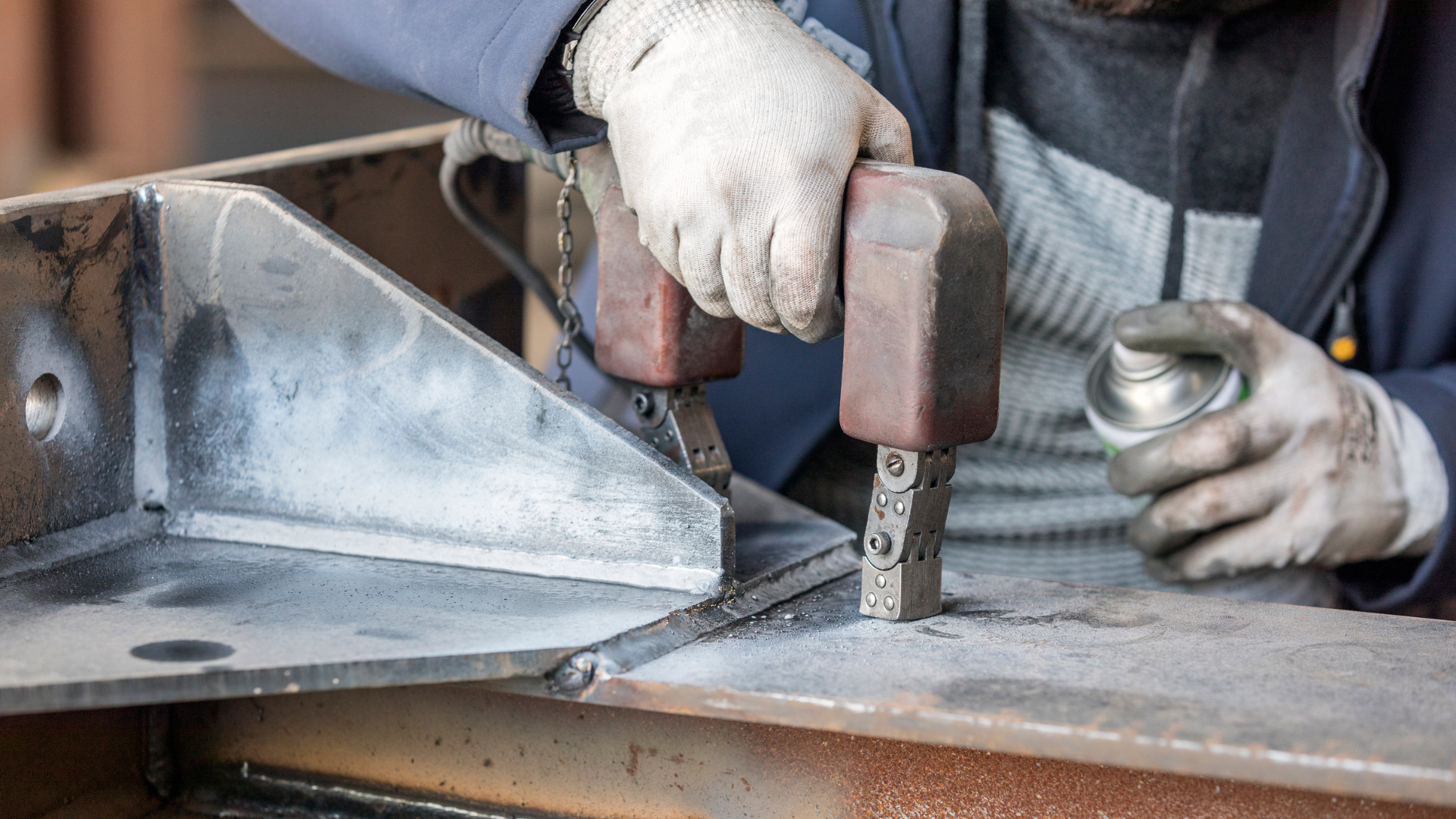
Inside The ASTM E1444 Requirements For Inspection Suppliers
What does ASTM E1444 require for magnetic particle inspection? At its core, the practice requires documented procedures, qualified people, and verified equipment and materials.
Written Procedures And Qualified Personnel
Every inspection must follow a detailed written procedure that defines the magnetization technique, current levels, part coverage, and the acceptance criteria that apply. Personnel must be qualified and certified to NAS 410 or another standard accepted by the cognizant engineering organization. Because current calculation formulas were removed from the practice, a Level 3 typically establishes magnetizing current using sample parts with known indications or quantitative quality indicators.
Process Controls Verified At Set Intervals
The practice includes a table of required checks and their frequencies. Common controls include:
- Particle concentration and contamination, measured by a settling test in a pear-shaped centrifuge tube
- UV-A intensity at the inspection surface and ambient visible light in the inspection area
- Daily UV-A lamp integrity checks, including confirmation that every LED diode functions
- System performance verification using an AS5282 tool steel ring
- Calibration of ammeters, gaussmeters, and light meters
Under ASTM E1444, a bath that fails the clarity check after a concentration test must be discarded and replaced.
How ASTM E1444 Testing Moves From Magnetization To Disposition
Inspection follows a defined order that protects detectability at each stage. Parts are first cleaned so oil, scale, or coatings do not mask indications. They are then magnetized in at least two directions, typically with circular and longitudinal fields, because indications appear most clearly when a discontinuity runs perpendicular to the magnetic flux. Wet fluorescent particles are applied while the part is magnetized and examined under UV-A light in a darkened booth.
Recent revisions require evaluation before demagnetization, since demagnetizing first can allow particles to drift away from indications. Relevant indications are judged against the acceptance criteria in the governing engineering documents, and parts are then demagnetized, cleaned, and documented for traceability.

Placing ASTM E1444 Inspection Within The Aerospace Finishing Sequence
Where magnetic particle testing falls in the routing affects what it can find. Inspection generally follows grinding, heat treatment, and final machining, which can introduce or open surface cracks. Running it before shot peening and plating is common practice, because peening can close surface-breaking discontinuities and coatings can reduce indication sensitivity, though the governing specification sets the final sequence.
Supplier fragmentation adds risk at this stage. A part that moves between separate inspection, plating, and peening vendors picks up handling, transit time, and a new documentation set at each handoff. Valence performs magnetic particle testing, cadmium and nickel plating, shot peening, and painting within one network under the Valence Standard quality system, keeping inspection and finishing records tied to the same part history across our Nadcap-accredited facilities.

Final Thoughts
ASTM E1444 gives aerospace programs a common baseline for magnetic particle testing, built on wet fluorescent particles, written procedures, qualified personnel, and verified process controls. Meeting that baseline consistently depends on supplier discipline and on where inspection sits in the part’s routing. Valence brings magnetic particle testing and downstream finishing together across twelve facilities, giving manufacturers one accountable partner for both inspection results and finished parts.
Frequently Asked Questions About ASTM E1444 Magnetic Particle Testing
How is ASTM E1444 different from ASTM E709?
ASTM E709 is a guide used for training and reference, while ASTM E1444 sets mandatory minimum requirements that can be invoked on drawings and contracts.
How does magnetic particle testing compare with fluorescent penetrant testing?
Magnetic particle testing can find slightly subsurface discontinuities but only in ferromagnetic parts, while penetrant testing under ASTM E1417 works on most nonporous materials but only detects surface-breaking defects.
Can magnetic particle testing damage a part?
It can if poorly controlled, since arc burns may form at electrical contact points, which is why procedures specify contact methods and current limits.
What causes nonrelevant indications during magnetic particle inspection?
Abrupt section changes, magnetic writing, and boundaries between materials with different magnetic properties can hold particles, so inspectors must separate these from relevant indications.
Do parts need to be marked after ASTM E1444 inspection?
Accepted parts are typically identified using the marking method and location specified by the cognizant engineering organization.
What inspection records should a supplier keep?
Records typically capture the procedure used, part identification, inspector, date, and results, retained for the period the contract requires.
How often is ASTM E1444 revised?
The practice has been revised several times in recent years, so programs should confirm which revision their contract or drawing invokes before inspection begins.