Key Takeaways:
- Operating Environment Determines Coating Selection: Temperature extremes, chemical exposure, and UV radiation drive which custom aerospace coatings will perform reliably over the component lifespan.
- Compliance is Non-Negotiable: Aerospace coating programs require verified certifications, including Nadcap, AS9100, and platform-specific qualifications, before production release.
- Surface Preparation Drives Long-Term Performance: Proper cleaning, etching, and pre-treatment directly impact coating adhesion, durability, and component reliability under operational stress.
Choosing the wrong surface finish for an aerospace component is a program risk. The wrong coating on the wrong substrate in the wrong environment can mean premature wear, corrosion, failed qualification testing, and costly redesigns that set programs back by months. With dozens of coating options available and compliance requirements that vary by platform, application, and operating environment, the selection process demands more than a catalog and a price comparison.
Valence Surface Technologies, the world’s largest independent aerospace surface finishing company, brings decades of experience helping aviation, defense, and space programs select, qualify, and apply the right custom aerospace coatings for their most demanding applications.
In this piece, we will cover what custom aerospace coatings are, the key factors that drive surface finish selection, the most common coating types and their applications, and how to avoid the mistakes that derail programs before they reach production.
What Are Custom Aerospace Coatings And Why Do They Matter?
Custom aerospace coatings are application-specific surface finishes engineered to meet unique performance requirements beyond standard commercial specifications. These coatings protect components from corrosion, thermal stress, chemical exposure, and mechanical wear while maintaining dimensional precision and weight constraints.
Protection Against Operational Extremes
Aerospace components are subject to temperature swings, humidity variations, salt spray exposure, contact with fuel and hydraulic fluids, and UV radiation. Non-aerospace or improperly specified coatings may fail under these conditions; qualified aerospace coating systems must be selected based on the specific exposure profile.
Custom formulations address specific environmental stressors while maintaining adhesion, flexibility, and chemical resistance throughout the component lifecycle.
Program Certification and Compliance
Military specifications, OEM requirements, and regulatory standards mandate specific coating systems for flight-rated parts. Custom coatings ensure components meet these certifications while supporting audit requirements and quality management documentation.
Supply Chain Risk Mitigation
Surface finish failures create costly rework, delivery delays, and program disruptions. Properly selected and applied custom aerospace coatings reduce rejection rates, improve first-pass yield, and maintain production schedules.
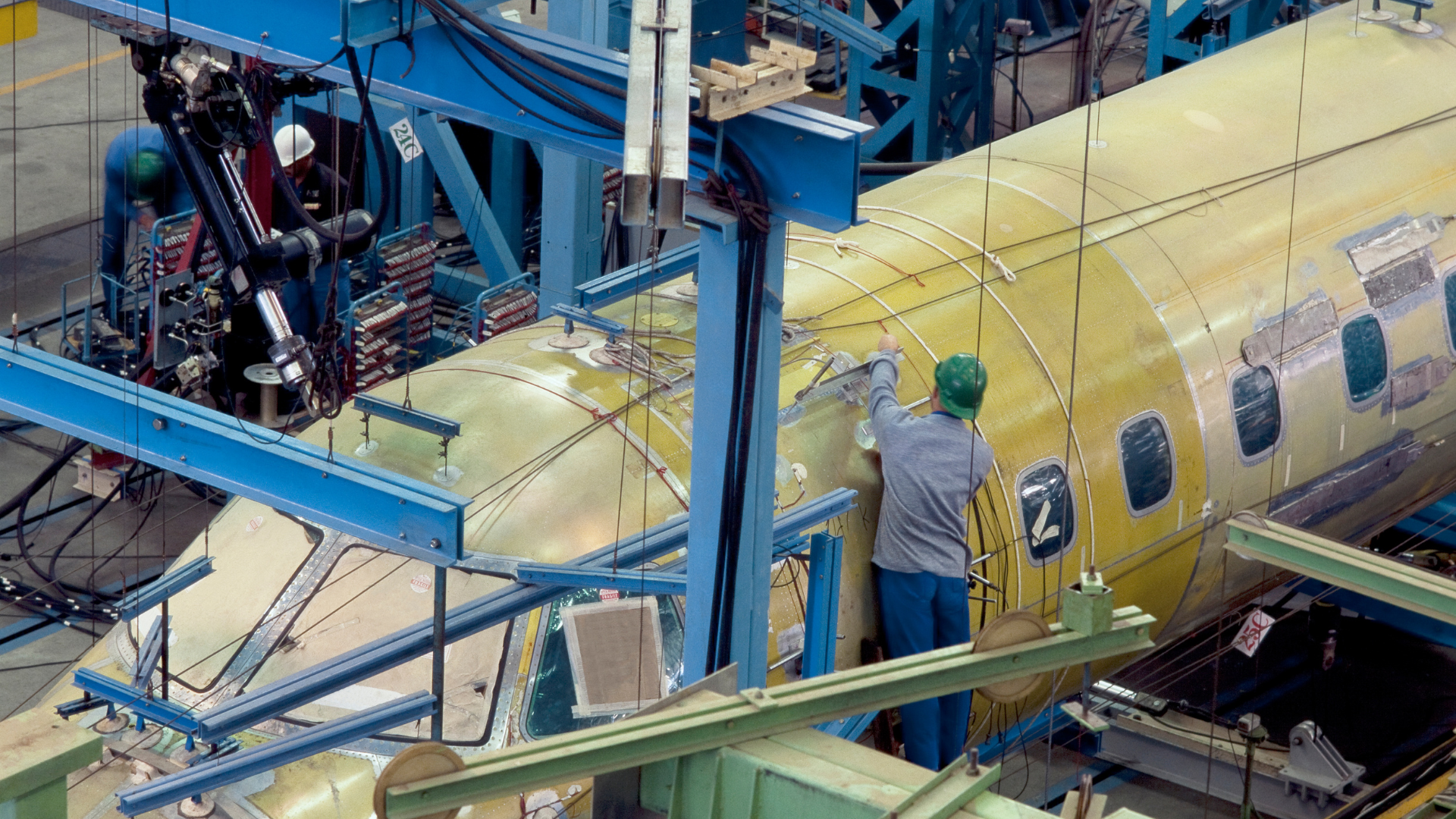
Key Factors That Determine The Right Surface Finish For Your Program
Material compatibility, operational environment, and performance specifications drive coating selection.
Base Material and Substrate Characteristics
Surface chemistry, oxide behavior, and pretreatment processes vary significantly by substrate. Aluminum commonly uses anodizing or conversion coating, while titanium and steels require different approaches. Chemical compatibility between the base material and the coating system prevents adhesion failure and premature degradation.
Mechanical and Thermal Stress Requirements
Components that experience vibration, thermal cycling, or mechanical wear require coatings with appropriate flexibility, hardness, and thermal expansion properties. Brittle coatings are more likely to crack or delaminate under cyclic mechanical or thermal strain if their strain tolerance and adhesion are inadequate.
Weight and Dimensional Tolerance Constraints
Aerospace programs operate within strict weight budgets and dimensional tolerances. Coating thickness, density, and application method must align with engineering specifications.
Common Custom Aerospace Coating Types And Their Applications
Different coating chemistries solve specific aerospace challenges.
Primers and Conversion Coatings
Epoxy primers provide corrosion resistance and serve as a base layer for adhesion. Chromate conversion coatings offer lightweight protection for aluminum components. Anodizing forms an integrated oxide layer with enhanced wear resistance.
Polyurethane Topcoats
Polyurethane topcoats are widely used for exterior aerospace applications because they offer weathering, UV, chemical, gloss, and color-retention performance. For programs requiring durable exterior finishes, our painting and spray coating capabilities are engineered to meet the most demanding aerospace specifications.
Specialty High-Performance Coatings
Thermal barrier coatings protect hot-section components in gas turbine applications. Chemical agent-resistant coatings meet military requirements for decontamination resistance. Conductive and static-dissipative coatings prevent electrical discharge in sensitive systems.
How Operating Environment Drives Surface Finish Selection
Environmental exposure determines which coating systems will perform well and which will fail prematurely.
Temperature Extremes and Thermal Cycling
High-temperature applications require coatings stable above their specified continuous-use limits. Cryogenic systems need low-temperature flexibility. Thermal cycling demands coatings that accommodate expansion and contraction without cracking.
Chemical and Fluid Exposure
Hydraulic fluids, jet fuel, deicing agents, and cleaning solvents attack incompatible coatings. Chemical-resistance testing validates coating durability under specific exposure profiles.
UV Radiation and Atmospheric Conditions
External components are subject to UV degradation, moisture infiltration, and salt-fog exposure. Coating systems must resist chalking, fading, and corrosion under sustained environmental attack.
Compliance And Certification Requirements For Custom Aerospace Coatings
Aerospace coatings operate under mandatory specifications.
Nadcap and AS9100 Certifications
Nadcap accreditation verifies special process capability through independent audits. AS9100 demonstrates quality management system compliance. These are commonly required or strongly preferred for aerospace coating suppliers, though exact requirements depend on contract, customer flow-downs, process category, and platform approval.
Military and Platform-Specific Specifications
MIL-DTL-5541, MIL-PRF-85582, and AMS specifications define coating requirements. OEM approvals and source qualification ensure compatibility with specific aircraft or defense programs.
Where hard-surface protection is required, our chrome plating capabilities meet stringent military and OEM specifications across a wide range of aerospace components.
Environmental and Safety Compliance
OSHA regulations, EPA air quality standards, and hazardous waste management requirements impact coating operations. Providers must demonstrate compliance with environmental regulations and worker safety programs.
Common Mistakes Aerospace Programs Make When Selecting Surface Finishes
Preventable errors create delays, quality issues, and cost overruns.
Treating Coating Selection as Procurement Rather Than Engineering
Choosing coatings based solely on price ignores performance requirements and long-term total cost of ownership. Engineering-driven selection prevents field failures.
Underestimating Lead Time and Capacity Requirements
Coating providers without adequate capacity or production rate capability become program bottlenecks. Rate-ready partners scale with production demands.
Inadequate Surface Preparation Specifications
Generic cleaning requirements fail to address contamination, oxide layers, or surface conditions. Detailed preparation specifications ensure consistent coating adhesion and performance.
How Valence Supports Custom Aerospace Coating Requirements Across Programs
We deliver integrated surface finishing solutions that eliminate supply chain fragmentation and reduce program risk.
Comprehensive Process Integration
Across its facility network, Valence provides chemical processing, specialty plating, painting, shot peening, and NDT capabilities. This integration eliminates handoffs, reduces lead time, and maintains quality control throughout the finishing process.
Unified Quality Management and Audit Readiness
Valence maintains continuous certification status for Nadcap, AS9100, and platform-specific approvals across all locations.
Scale and Capacity for Modern Aerospace Production
Our 750,000+ square feet of production space and strategic facility locations support commercial, defense, and space programs. Continuous investment in technology, the workforce, and environmental systems positions us to meet current and future aerospace manufacturing demands.
To explore the full range of finishing solutions we offer, visit our services page.
Final Thoughts
Selecting the right custom aerospace coating is not a decision to make lightly; the performance, compliance, and longevity of critical components depend on it. Every operating environment, substrate material, and program specification introduces variables that demand technical expertise, process discipline, and a finishing partner with a proven track record.
Valence Surface Technologies brings all of that to every project. As the world’s largest independent aerospace surface finishing company, Valence works alongside aviation, defense, and space programs to identify the right coating solutions, meet the most stringent compliance requirements, and deliver consistent, certified results at scale.
When the stakes are high and the specifications are tight, Valence is the partner aerospace programs rely on to get surface finishing right, the first time.
Frequently Asked Questions About Custom Aerospace Coatings: How To Choose The Right Surface Finish For Your Program
What compliance standards and certifications should I verify before selecting an aerospace coating provider?
Verify Nadcap special process accreditations, AS9100 quality management system registration, and platform-specific OEM approvals relevant to your program requirements.
How does surface preparation impact coating adhesion and long-term component performance?
Proper surface preparation removes contaminants and weak oxide layers, increases surface energy, and creates micro-scale surface roughness that supports mechanical interlocking and chemical adhesion, directly determining coating durability under operational stress.
What are the critical differences between polyurethane and epoxy topcoats for aerospace applications?
Polyurethane topcoats provide superior UV resistance and weathering durability for external components, while epoxy coatings offer chemical resistance and are primarily used as primers.
What thermal and environmental resistance requirements should I consider for my specific aerospace components?
Evaluate maximum and minimum operating temperatures, thermal cycling frequency, chemical exposure profiles, UV radiation levels, and moisture conditions your components will encounter during service life.
How do I evaluate a coating provider’s facility capacity and readiness for production?
Review total production square footage, equipment capability, workforce capacity, average lead times, and documented performance meeting production rate requirements for similar programs.
Which quality management and audit-readiness capabilities should I prioritize when selecting a coating partner?
Prioritize active Nadcap accreditations, documented quality management systems, traceability protocols, corrective action response processes, and demonstrated audit performance across multiple assessments.