
Key Takeaways:
- Electroless Nickel Delivers Mission-Critical Protection: Provides uniform corrosion and wear resistance for landing gear and connectors in extreme operational environments.
- Complex Geometry Demands Autocatalytic Processing: Unlike traditional electroplating, electroless nickel can coat intricate aerospace connector designs with consistent thickness across multiple surfaces when properly processed.
- Aerospace Specifications Drive Quality Standards: Compliance with AMS 2404 and Nadcap-accredited process controls supports repeatable quality for flight-critical components.
Landing gear absorbs thousands of pounds of force on every touchdown. Aerospace connectors maintain signal integrity in environments where temperature swings, vibration, and corrosion never stop. Both demand surface coatings that perform without compromise, and electroless nickel plating is one of the few finishing solutions engineered to meet that standard. The challenge is knowing when it is the right choice, how it performs across different component types, and what specification requirements govern its use.
Valence Surface Technologies, the world’s largest independent aerospace surface finishing company, delivers electroless nickel plating solutions across aviation, defense, and space programs, with the certifications and process controls to back every lot.
This guide covers electroless nickel plating in detail for aerospace applications, from landing gear and connectors to compliance requirements and selecting the right finishing partner for your program.
What Is Electroless Nickel Plating For Aerospace Applications?
Electroless nickel plating for aerospace applications is a chemical deposition process that creates a nickel-phosphorus alloy coating on metal substrates without requiring electrical current. This autocatalytic reaction produces uniform thickness across many surfaces, including internal passages, threads, and recessed geometries, where traditional electroplating often struggles to achieve uniform thickness because deposition depends on current distribution.
The process operates through controlled immersion in a heated chemical bath containing nickel ions, reducing agents, and stabilizers. Electroless nickel thickness is specified by drawing or governing specification; aerospace applications commonly use deposits in the low-mil range, such as approximately 0.0005–0.003 inches, with other thicknesses possible when specified. The resulting coating provides corrosion resistance, wear protection, and dimensional restoration for components operating in demanding aviation environments.

Critical Performance Benefits Of Electroless Nickel In Aviation
Electroless nickel plating delivers specific performance advantages that address operational demands in commercial and military aviation applications.
Uniform Corrosion Protection Across Complex Surfaces
The autocatalytic deposition process coats exposed surfaces with excellent uniformity when properly controlled, protecting landing gear actuators, connector housings, and hydraulic components from moisture, salt spray, and chemical exposure throughout their service life.
Enhanced Wear Resistance Under Cyclic Loading
Heat-treated electroless nickel can achieve hardness in the approximate 65–70 HRC range, providing superior abrasion resistance for components experiencing repeated mechanical contact during normal operations.
Dimensional Restoration Without Geometric Distortion
Controlled deposition allows precise thickness buildup to restore worn or undersized components to specification tolerances without the geometric distortion associated with other repair processes.
Engineering Electroless Nickel Landing Gear For High-Load Durability
Landing gear systems demand coating solutions that maintain integrity under extreme mechanical stress, corrosion exposure, and temperature cycling.
Load-Bearing Requirements and Coating Selection
Some landing gear components may specify electroless nickel, but the required thickness and phosphorus content are determined by OEM drawing, repair specification, substrate, and service environment. Mid-phosphorus electroless nickel is commonly defined around 5–9% phosphorus, while high-phosphorus deposits are typically 10% or greater.
Heat Treatment for Hardness Enhancement
Post-deposition precipitation heat treatment, commonly in the approximate 260–400°C range specified by the governing standard, substantially increases coating hardness, thereby improving wear resistance for components experiencing repeated ground-contact cycles.
Fatigue Performance and Hydrogen Embrittlement Control
Proper hydrogen embrittlement relief baking reduces residual hydrogen and mitigates the risk of hydrogen embrittlement in susceptible high-strength steel landing gear components operating under cyclic stress.
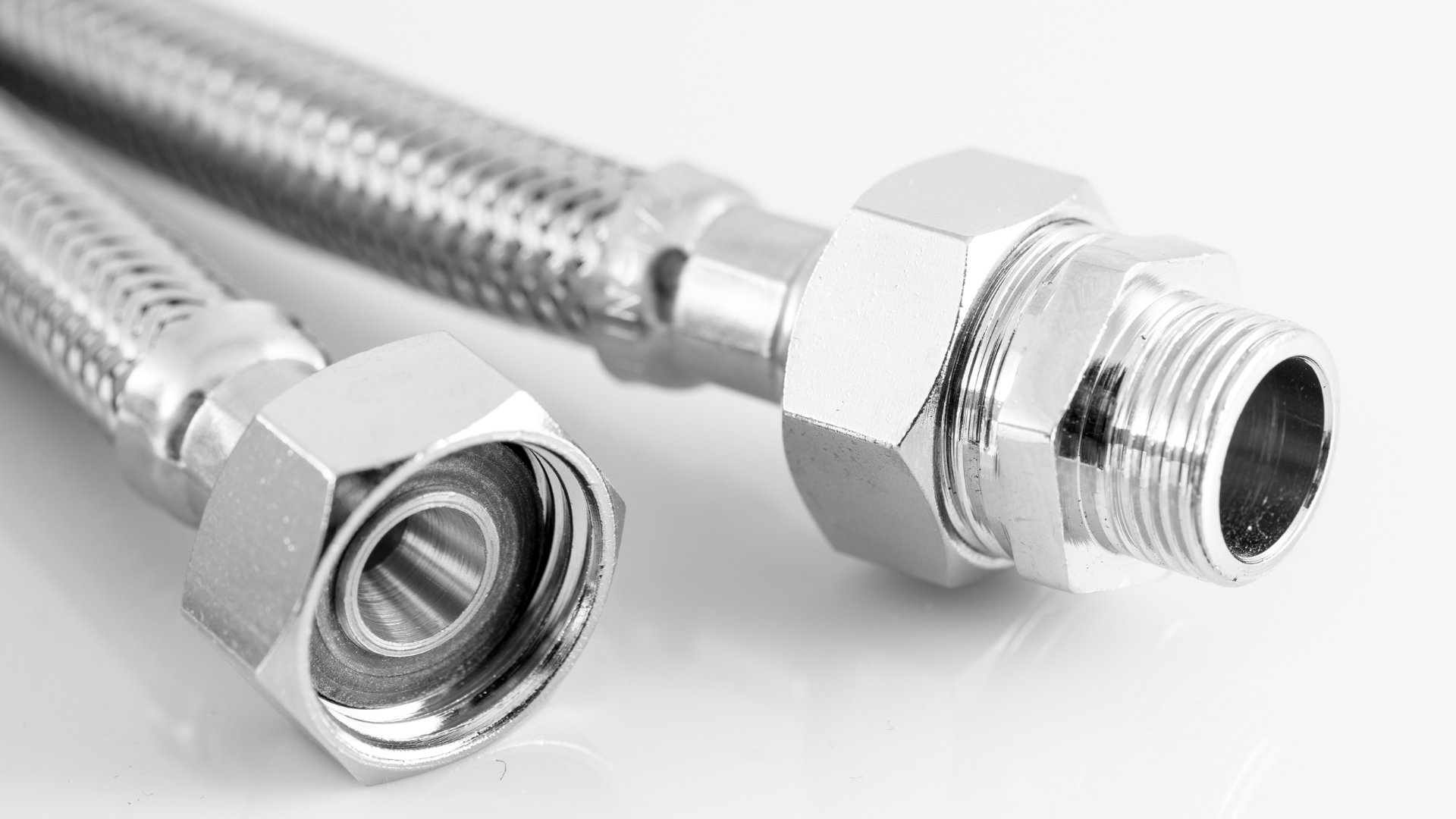
Protecting Complex Geometry In Electroless Nickel Aerospace Connectors
Aerospace connectors present unique coating challenges due to intricate geometries, tight tolerances, and electrical performance requirements.
Achieving Uniform Thickness in Recessed Cavities
Electroless nickel deposits with much more uniform thickness than electrolytic plating inside threaded connector bodies, backshell assemblies, and pin receptacles, provided process parameters are properly controlled.
Masking Strategies for Contact Surfaces
Selective masking protects gold-plated electrical contacts and mating surfaces from nickel deposition while coating protective housings and mounting features.
EMI Shielding and Electrical Conductivity
Electroless nickel can contribute to EMI shielding when applied as a continuous conductive coating on connector housings or RF components, but shielding performance depends on alloy phosphorus content, coating thickness, continuity, grounding, frequency, and overall connector design.
For programs requiring alternative surface treatments alongside electroless nickel, our chrome plating capabilities offer complementary hard-surface finishing solutions for complex aerospace components.
Specification And Compliance Requirements For Electroless Nickel In Aerospace
Aerospace electroless nickel plating operates under strict specification and certification frameworks.
AMS 2404 Standards
AMS 2404 defines coating composition, thickness ranges, adhesion requirements, and testing protocols that govern electroless nickel applications on commercial and military aircraft components.
Nadcap Accreditation and Process Control
Nadcap accreditation demonstrates the facility’s capability to maintain process controls, equipment calibration, and quality documentation required for aerospace surface finishing operations.
Material Traceability and Documentation Requirements
Complete lot traceability, chemical analysis records, and test certifications accompany each production run, ensuring audit readiness and program compliance.
How Valence Supports Electroless Nickel Plating Across Aerospace Applications
We operate unified electroless nickel capabilities across our integrated platform, processing components from precision connectors to large landing gear assemblies under a single Quality Management System.
Consolidated Processing Under One Accountable Partner
Our integrated facilities eliminate vendor handoffs by consolidating electroless nickel plating with NDT, chemical processing, painting, and sub-assembly services, reducing supply chain complexity and program risk. To learn more about the full range of finishing solutions we offer, visit our services page.
Rate-Ready Capacity for Production Programs
Strategic capital investment in equipment, environmental systems, and workforce development ensures we maintain throughput capacity that supports modern aerospace production rates without compromising quality or delivery performance.
Continuous Compliance and Audit Readiness
All locations operate under the Valence Standard, maintaining full compliance with certification requirements, unified documentation protocols, and audit-ready quality systems that simplify program management across multiple facilities.
To explore how our broader nickel plating capabilities support dimensional restoration and performance finishing across aerospace programs, our services page provides a complete overview.

Final Thoughts
Electroless nickel plating in aerospace applications continues expanding as programs demand greater durability, tighter tolerances, and improved corrosion protection. The coating’s combination of uniform thickness distribution on complex geometries, mechanical properties, and specification compliance makes it suitable for electroless nickel landing gear, connector housings, and mission-critical components when properly specified.
Selecting a finishing partner requires evaluating coating capability, capacity, quality systems, and operational consistency. Valence has built its platform to address these requirements, delivering electroless nickel plating backed by certifications, facilities, and experience supporting aerospace manufacturing at scale.
Frequently Asked Questions About Electroless Nickel Plating For Landing Gear And Aerospace Connectors: An Applications Guide
How does electroless nickel protect landing gear from corrosion and wear in demanding flight environments?
Properly applied electroless nickel creates a dense, low-porosity barrier coating that prevents moisture and contaminant penetration while its enhanced hardness resists mechanical wear from landing impacts and ground operations when thickness and process controls meet specification requirements.
What are the key differences between electroless nickel plating and traditional electroplating methods?
Electroless nickel uses chemical reduction without electrical current, producing more uniform thickness on complex geometries than electrolytic plating, which requires electrical contact and creates thickness variations based on current density distribution.
What coating thickness is required for landing gear applications, and how does Valence ensure compliance with aerospace specifications?
Landing gear typically requires 0.0005″ to 0.002″ of electroless nickel thickness, depending on component function, and we verify compliance using magnetic thickness gauges, cross-sectional analysis, and documented process controls that meet AMS 2404 and customer drawing requirements.
What are the industry standards and certifications required for electroless nickel plating in aerospace manufacturing?
AMS 2404, AMS-C-26074, and ASTM B733 establish coating requirements, while AS9100 quality management, Nadcap accreditation, and specific OEM approvals demonstrate process capability and audit readiness.
What surface preparation steps are essential before electroless nickel plating, and why do they matter?
Cleaning, degreasing, and substrate activation remove contaminants and create reactive surfaces necessary for proper coating adhesion, preventing delamination or coating failure during service.
How does consolidating electroless nickel plating with other surface finishing processes reduce supply chain risk and complexity?
Single-source processing eliminates multiple vendor handoffs, reduces lead times, simplifies quality documentation, and maintains continuous accountability from raw material through final inspection.