
Key Takeaways:
- Passivation Creates A Double-Edged Sword: The process that protects against corrosion may leave threads vulnerable to galling without proper preventive measures.
- Prevention Requires A Multi-Layered Approach: Lubrication, coating selection, thread design, and installation control must work together.
- Compliance Documentation Is Non-Negotiable: Aerospace and defense programs demand audit-ready verification of galling prevention protocols.
Galling on stainless steel threads is one of those problems that catches teams off guard, particularly after passivation, when the very process applied to protect the surface inadvertently increases the risk of thread seizure. It is a paradox that frustrates engineers and procurement teams alike; the treatment meant to extend component life creates the conditions for premature failure.
Valence Surface Technologies, the world’s largest independent aerospace surface finishing company, processes stainless steel components to the strictest aerospace standards, with deep expertise in passivation processes and the downstream effects that impact fastener performance.
In this piece, we will cover what causes galling after passivation, why stainless steel is particularly vulnerable, and the most effective strategies for preventing it on threaded fasteners.
What Is Galling And Why Does It Occur On Stainless Steel Threads?
Galling is cold welding between metal surfaces under pressure and friction. When stainless steel threads engage, microscopic surface asperities contact, generate heat, and create localized adhesion.
Unlike wear or abrasion, galling involves actual material transfer between mating surfaces, leading to progressive thread destruction. Understanding how to prevent galling threaded fasteners starts with recognizing the surface chemistry and mechanical conditions that make stainless steel uniquely susceptible.
The Mechanics Behind Thread Seizure
Austenitic stainless steels are prone to adhesive wear due to their ductility, work-hardening behavior, and tendency to form strong metallic junctions under pressure and during sliding. During tightening, contact pressure exceeds the material’s yield strength at microscopic points.
The protective oxide layer breaks down under shear stress, exposing fresh metal that instantly bonds with the mating surface. Continued rotation tears material from one surface and deposits it on the other, building up until the fastener locks completely.
Material Properties That Increase Galling Risk
Both 304 and 316 stainless steels are susceptible to galling. These austenitic alloys exhibit high ductility and work-hardening characteristics, meaning threads deform rather than shear cleanly under stress.
The strain-hardening effect progressively increases surface hardness during installation, creating even stronger adhesive bonds. Relative galling behavior depends on hardness, surface finish, lubrication, thread geometry, and assembly conditions rather than alloy grade alone.
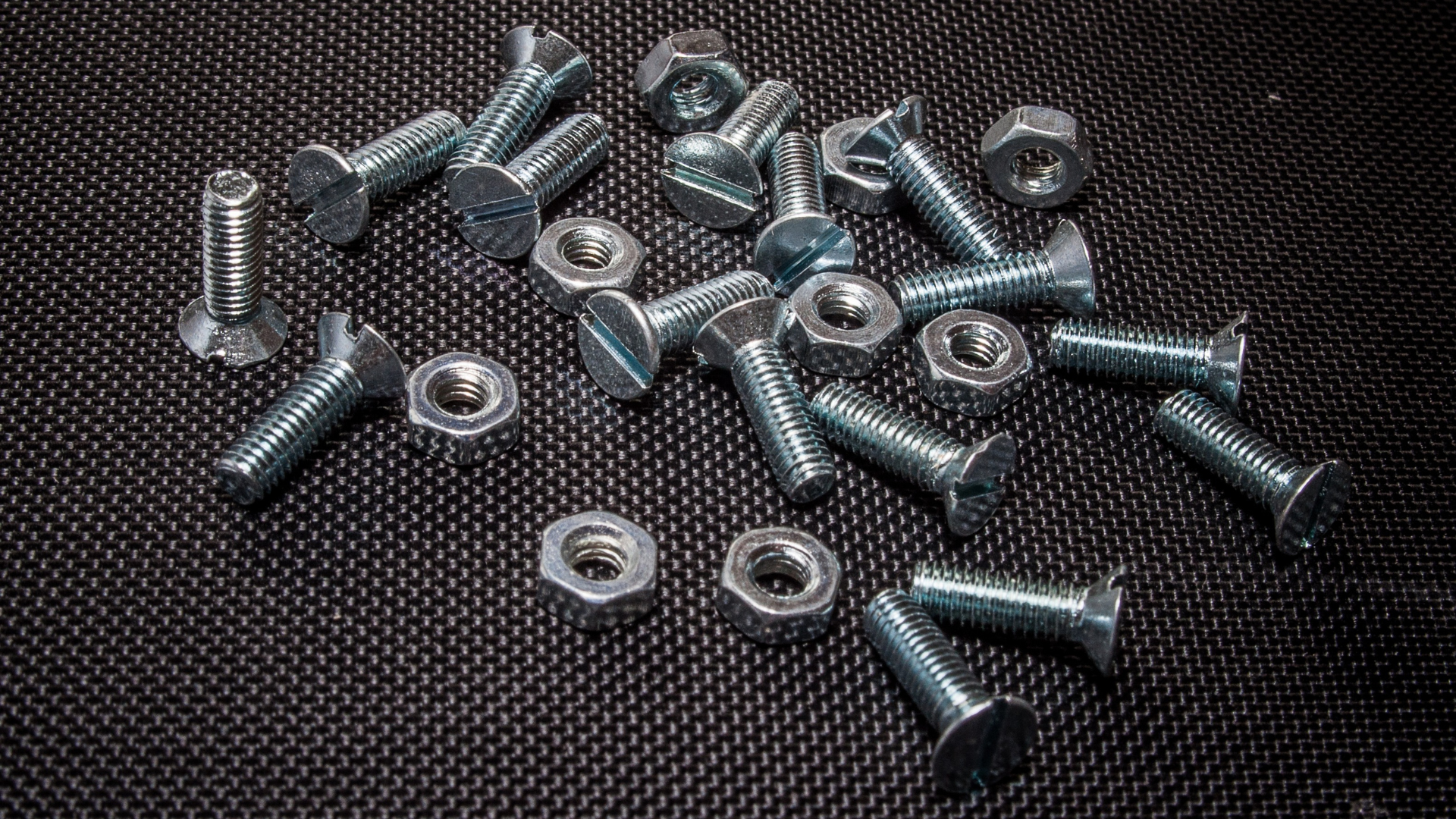
The Relationship Between Passivation And Galling On Stainless Steel
Passivation of stainless steel is commonly specified for aerospace corrosion-resistant steel components, often using AMS 2700 when required by drawing, purchase order, or program specification. This treatment chemically removes free iron and surface contaminants while supporting the formation of a chromium-rich passive film. However, passivation fundamentally alters surface characteristics, requiring additional galling-prevention measures.
For programs managing stainless steel galling passivation risks, understanding what happens at the surface level after treatment is essential to building an effective prevention strategy.
How Surface Chemistry Changes After Passivation
Passivation chemically cleans the surface and supports the formation of a chromium-rich passive film, but it does not necessarily smooth the surface or eliminate topographical variation.
Freshly cleaned and passivated stainless surfaces may have fewer contaminant films separating mating threads; however, the passive oxide layer itself is intended to reduce chemical reactivity and improve corrosion resistance.
Without subsequent protective treatment or lubrication, clean metal-to-metal contact can increase adhesion potential during thread engagement.
The Clean Surface Challenge
Clean surfaces can experience greater true metal-to-metal contact area than contaminated or pre-lubricated surfaces. When passivated threads engage uniformly across the entire thread form, distributed contact increases total adhesive force compared to rougher surfaces where contact occurs only at peak points.
Why Passivated Stainless Steel Fasteners Are More Susceptible To Galling
The timing of passivation in the manufacturing sequence creates inherent vulnerability. Parts are typically passivated as a final chemical operation after machining and deburring. This means threads receive no subsequent protective treatment unless specifically applied as a separate finishing step.
Thread Tolerance Impact
Aerospace specifications demand tight thread tolerances for structural integrity and vibration resistance. Class 3A/3B threads provide tighter-tolerance fits than Class 2A/2B and can increase sensitivity to surface condition, lubrication, and assembly control. Combined with passivation’s clean surface condition, this geometric precision can maximize contact pressure and galling risk without proper preventive measures.
Common Causes Of Galling After Passivation In Aerospace Applications
Multiple operational factors compound passivation-related galling risk in mission-critical manufacturing.
Installation Speed and Technique Variations
Improperly controlled power-tool installation, especially at high speed, poor alignment, or inadequate torque control, can increase heat and friction, raising the risk of galling. Operator technique variations across shifts introduce quality inconsistencies even with identical fasteners.
Environmental Contamination Post-Passivation
If handling, packaging, storage, or transport controls are inadequate, passivated parts may accumulate films or particulates that affect lubrication and assembly performance. Moisture, oils, and contaminants alter surface chemistry unpredictably, rendering engineered galling-prevention measures ineffective.
Material Pairing Issues
Mating passivated stainless fasteners with dissimilar materials, aluminum structures, titanium fittings, or other stainless grades creates galvanic and mechanical compatibility challenges. Each combination exhibits unique friction characteristics and load distribution patterns affecting galling susceptibility.
How To Prevent Galling On Passivated Stainless Steel Threaded Fasteners
Systematic prevention requires addressing surface treatment, mechanical design, and assembly procedures simultaneously.
Pre-Passivation Surface Preparation
Thread surface condition entering passivation significantly impacts final assembly performance. Deburring quality, machining marks orientation, and pre-cleaning effectiveness set baseline conditions. Parts should be properly cleaned before passivation because oils and organic residues can interfere with the process.
Controlled Passivation Processing
Process variables, acid concentration, temperature, and immersion time must remain within their specified ranges. We maintain real-time process monitoring and statistical process control across all chemical operations, ensuring consistent oxide layer formation.
To learn more about how we manage this process, explore our full range of services built around aerospace-grade surface finishing requirements.
Thread Design Optimization
Where design authority permits, specifying Class 2A/2B threads instead of Class 3A/3B provides additional clearance that can reduce contact pressure sensitivity. Thread relief grooves, reduced engagement length, and optimized thread-form modifications may reduce the probability of galling without compromising joint integrity, subject to design approval.
Coating And Lubrication Solutions That Reduce Galling Risk After Passivation
Post-passivation surface treatments provide mechanical separation between mating threads.
Dry Film Lubricants
Molybdenum disulfide, PTFE, and graphite-based coatings can reduce galling risk by lowering friction and separating surfaces. These treatments must withstand aerospace environmental requirements while maintaining dimensional tolerances.
Application must occur post-passivation as a separate finishing operation. Selection must be application-specific, taking into account temperature, humidity, vacuum exposure, and contamination restrictions.
Silver and Copper Plating
Thin, precious-metal deposits provide sacrificial layers with superior lubricity compared to stainless substrates. Silver plating per AMS 2410 is a recognized anti-galling and conductive surface treatment, though electrical bonding performance still requires design- and process-specific verification.
Where silver plating is not suitable, our nickel plating capabilities offer an alternative protective layer with proven wear resistance and compatibility across a wide range of aerospace fastener applications.
Anti-Seize Compounds
Thread lubricants containing metallic particles or solid lubricants reduce friction coefficients during installation. Selection must consider temperature exposure, chemical compatibility, and contamination concerns in assembled systems.
For applications requiring maximum surface durability, our chrome plating services provide an additional hard-surface option that can be evaluated alongside anti-seize strategies to deliver the most effective protection for mission-critical threaded assemblies. Aerospace specifications often restrict permissible compounds based on program requirements.
Final Thoughts
Preventing galling after passivation on stainless steel threads demands technical precision and systematic process control. The surface chemistry changes that protect against corrosion may leave threads vulnerable to adhesive wear, a reality that aerospace manufacturers must address through engineered finishing sequences, appropriate coating selection, and rigorous quality verification. Success requires understanding the interplay between metallurgy, surface treatment, mechanical design, and assembly procedures.
Valence’s purpose-built platform delivers the integrated capability, technical depth, and production capacity that mission-critical programs require. Our consolidated approach eliminates the vendor coordination challenges that compromise quality outcomes while maintaining the compliance rigor that aerospace manufacturing demands.
Frequently Asked Questions About How To Prevent Galling After Passivation On Stainless Steel Threads
How does passivation impact the surface properties of stainless steel and its susceptibility to galling?
Passivation creates more chemically stable surfaces with enhanced corrosion resistance but reduced natural lubricity. These surface changes, combined with high thread loads and metal-to-metal contact, increase the potential for adhesive wear if proper lubrication and assembly controls are not implemented.
What industry standards and compliance requirements govern threaded components in defense and space manufacturing?
Aerospace threaded components must comply with ASTM A967 for passivation, AMS 2700 for processing requirements, ASME B1.1 for thread specifications, and program-specific specifications addressing galling prevention and assembly procedures.
What pre-passivation strategies are most effective for reducing galling risk in mission-critical applications?
Thread tolerance optimization, surface finish specification control, and design reviews addressing engagement geometry reduce galling risk before passivation processing begins.
How should lubrication be applied before passivation to prevent galling without compromising surface treatment?
Lubricants must be applied after passivation is complete to avoid chemical interference; pre-passivation lubrication contaminates the treatment chemistry and prevents proper oxide layer formation.
Which testing protocols should be used to verify galling-prevention measures before production release?
Torque-tension testing, thread engagement cycling, and accelerated wear evaluation under representative assembly conditions verify the effectiveness of galling prevention before a full production commitment.
How can organizations implement audit-ready documentation systems to demonstrate compliance?
Unified Quality Management Systems capturing passivation parameters, coating specifications, assembly procedures, and verification testing results in traceable formats satisfy aerospace audit requirements and regulatory standards.