
Key Takeaways:
- Performance, not recipe: MIL-PRF-85285 defines how a topcoat must perform, not how it’s formulated, so compliance rides on qualification testing.
- QPL is non-negotiable: Only products listed on QPL-85285 are eligible for federal contract award, making verification a procurement gate.
- System-level compliance: The topcoat only performs when paired with a qualified primer and applied under controlled conditions; the whole stack matters.
A topcoat is the last thing anyone notices, until it fails, and suddenly it is the only thing anyone is talking about. MIL-PRF-85285 exists precisely because aerospace topcoats cannot afford to fail, governing the polyurethane finishes that protect critical components from UV degradation, chemical exposure, and environmental wear. For program engineers navigating supplier qualification and coating selection, understanding this specification is not optional; it is foundational.
Valence Surface Technologies, the world’s largest independent aerospace surface-finishing company, applies MIL-PRF-85285-compliant topcoat processes across aviation, defense, and space programs, backed by the certifications and process controls these requirements demand.
In this piece, we will cover what MIL-PRF-85285 requires, how polyurethane topcoats meet its standards, and what program engineers need to know before specifying it.
What Is MIL-PRF-85285 And Why Does It Matter For Aerospace Programs?
MIL-PRF-85285 is the DoD performance specification that governs polyurethane topcoats for military aircraft and support equipment. For program engineers, it’s the standard that determines whether your exterior coating will survive service and clear audit.
The role of the spec
MIL-PRF-85285 is a military specification detailing the requirements for a high-performance polyurethane coating designed for use on aircraft and aerospace equipment, outlining the standards the coating must meet to support durability, corrosion resistance, and reliable performance in demanding operating environments. It’s a performance spec, meaning it dictates outcomes, not chemistry.
Why it carries program weight
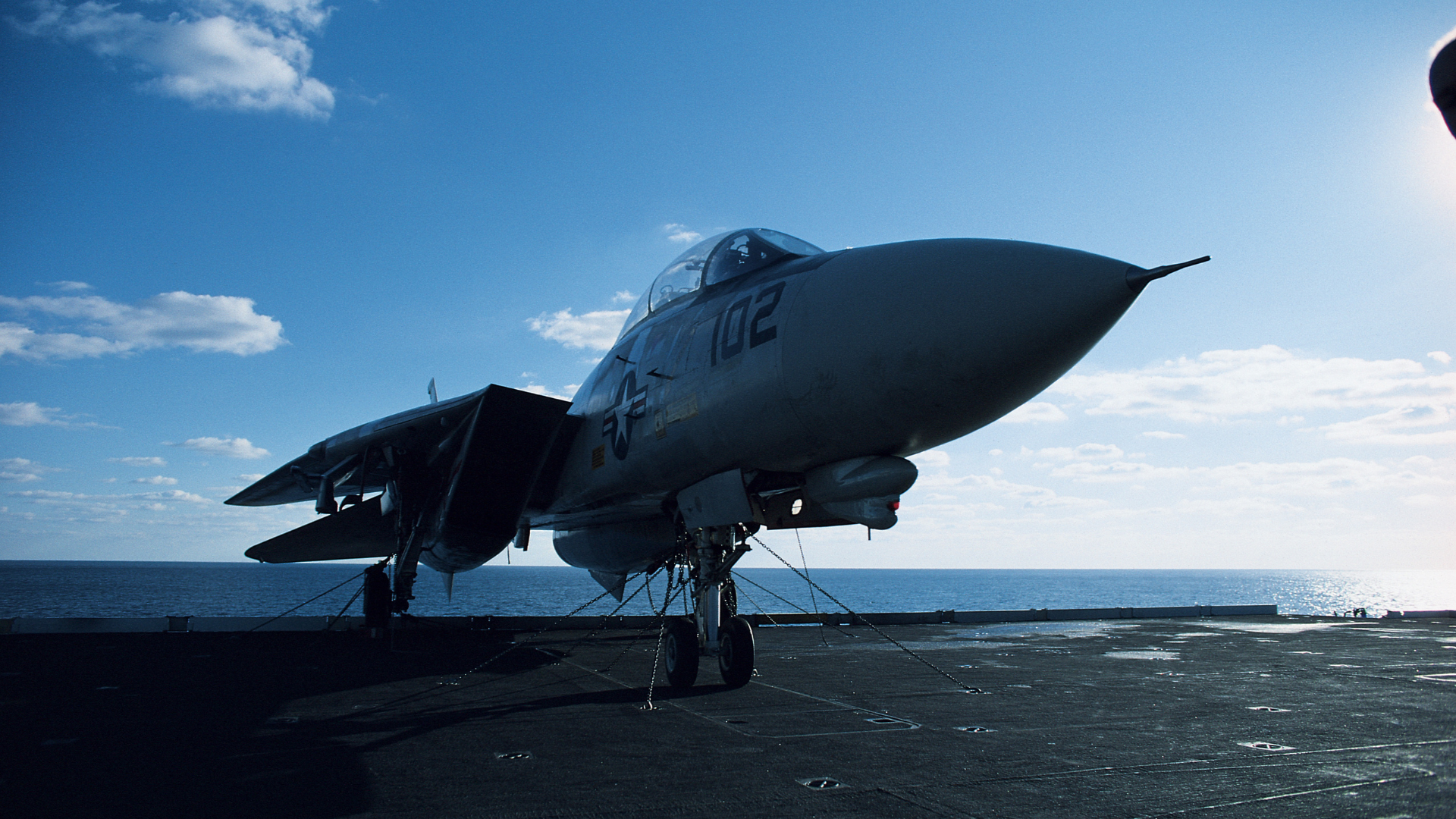
The topcoat is the final layer over a prepared, primed surface, and it is far more than cosmetic. The top coat is absolutely critical for corrosion resistance. On the fleet side, MIL-PRF-85285 is the standard topcoat used on all U.S. Navy and Marine Corps aircraft, and it’s also used on Air Force platforms as a primary topcoat. Miss the spec, and you risk rework, delayed acceptance, and program schedule slip.
Key Requirements Of The MIL-PRF-85285 Aerospace Topcoat Specification
The specification is organized around performance thresholds and a classification system that tells you exactly which product fits which application.
Performance thresholds
The specification defines physical, chemical, and mechanical requirements, including adhesion strength, flexibility, impact resistance, hardness, and resistance to chemicals and solvents. These aren’t cosmetic checkpoints; they’re operational survivability requirements.
VOC and formulation limits
The spec caps volatile organic compounds and hazardous air pollutants. The maximum VOC content shall be 420 grams per liter for types I and IV coatings, 340 g/l for type II coatings, and 50 g/l for type III coatings. Materials used to manufacture these coatings are not limited, provided that the resulting coatings meet the requirements of this specification.
How Polyurethane Topcoats Meet MIL-PRF-85285 Performance Standards
Polyurethane chemistry is the reason this spec exists; it delivers the durability envelope military aircraft demand.
Why polyurethane
MIL-PRF-85285 Type I, Class H is a two-component, high-solids, aliphatic polyurethane coating that is resistant to chemicals, solvents, and abrasion, and is specially formulated for excellent ultraviolet ray resistance and superior exterior durability. That combination is difficult to replicate with other chemistries.
The performance envelope
A qualified topcoat delivers chemical resistance to Skydrol and other hydraulic fluids, plus outstanding gloss and gloss retention during weathering. Commercial polyurethane topcoat aerospace spec products should not be treated as substitutes unless they are qualified/listed or specifically approved for the program requirement.
Testing And Qualification Requirements Under MIL-PRF-85285
Meeting the spec on paper isn’t enough; a product must be tested and qualified by the government before it can be used.
Where qualification happens
Certification for these coatings is administered by the U.S. Naval Air Warfare Center at Patuxent River, Maryland, which conducts thorough testing to verify that products meet all specification requirements.
What gets tested
Adhesion testing confirms that coatings remain firmly attached under stress, using cross-hatch cutting followed by tape removal to measure bonding; additional tests assess adhesion after exposure to fluids and environmental conditions, and impact resistance testing verifies that the coating can withstand physical damage. Fluid resistance is stringent; Grade P addresses resistance to exposure to phosphate-ester hydraulic fluid under the specification’s defined test conditions.
Common Compliance Challenges Program Engineers Face With MIL-PRF-85285
Most compliance failures aren’t about the coating itself; they’re about selection, ordering, and process control.
Ordering the wrong type or grade
Even the most experienced buyers can make mistakes when ordering consumables; common mistakes include selecting type II instead of type I for aircraft applications and ordering the wrong grade where phosphate ester resistance is required. Type II is intended for support equipment, not aircraft.
Managing pot life and application
Class H coatings demand disciplined process control. The application, mixing, and labeling section provides strict guidance on mixing sequence and ratios, pot life of four to five hours depending on viscosity, thinning limitations, and spray application methods—conventional, airless, HVLP, or electrostatic. Deviation here shows up as adhesion or gloss defects downstream.
How MIL-PRF-85285 Fits Into The Broader Aerospace Coating System
The topcoat is one layer in a qualified stack. It performs only when paired with a compatible primer over a properly prepared substrate.
The standard system
All U.S. Navy and Marine Corps aircraft shall be finished in accordance with MIL-STD-7179, where the standard primer coating shall be MIL-PRF-23377 Type I or MIL-PRF-85582 Type I, and the standard topcoat shall be MIL-PRF-85285.
Why the system view matters
MIL-PRF-85285 is often specified as part of a complete aerospace coating system, and related specifications such as the MIL-PRF-85582 aerospace primer and the MIL-PRF-23377 epoxy primer may also be referenced depending on surface preparation and performance requirements. Compliance is a system property, not a single-layer property.
How Valence Supports MIL-PRF-85285 Compliant Topcoat Application
We treat coatings as one integrated stage in a larger finishing chain, not an isolated handoff.
Integrated, accountable finishing
We bring painting and coatings together with NDT, chemical processing, and specialty plating under one roof, so the primer-to-topcoat system stays under a single accountable partner. That eliminates the vendor fragmentation and handoff risk that historically stalled aerospace programs.
To see which of our facilities support compliant topcoat application in your region, visit our Locations & Compliance Hub.
Consistent quality at rate
We operate a unified quality management system, the Valence Standard, across all our facilities, giving you consistent compliance and audit readiness site-to-site. With rate-ready capacity built through continuous capital investment, we support MIL-PRF-85285 topcoat application from precision components to large aerostructures without sacrificing performance consistency.

Final Thoughts
MIL-PRF-85285 isn’t a box to check; it’s a performance contract for the outermost defense of your aircraft. Getting it right means selecting the correct type, class, and grade, verifying QPL eligibility, applying it as part of a qualified primer system, and controlling every process variable. Programs that treat the topcoat as an integrated finishing stage, not a downstream afterthought, reduce risk and protect the schedule. That’s the discipline we build into every part we finish.
Frequently Asked Questions About MIL-PRF-85285: The Aerospace Topcoat Spec Explained For Program Engineers
How does MIL-PRF-85285 differ from the older MIL-C-83286 specification?
MIL-PRF-85285 supersedes MIL-C-83286. MIL-C-83286B established requirements for two-component aliphatic isocyanate urethane coatings and was superseded by MIL-C-85285 and MIL-PRF-85285. The newer spec adds tighter VOC limits and a performance-based framework.
What are the different types, classes, and grades defined in MIL-PRF-85285?
Types cover application: Type I is intended for exterior use on aircraft and weapon systems, while Type II is intended for ground support equipment. Classes include Class H and Class NH high-solids systems and Class W and Class NW waterborne systems, depending on formulation and isocyanate status. Grades address fluid resistance.
How does a polyurethane topcoat get qualified under MIL-PRF-85285?
A manufacturer submits samples for government testing. For procurements requiring qualified products, products must be authorized/listed under the applicable QPL/QPD before award or use as specified by the contract. Testing verifies adhesion, flexibility, fluid resistance, and other performance requirements at Patuxent River.
What is the Qualified Products List (QPL) and how do I use it?
The QPL-85285 lists every product that has been proven to meet the spec. It lists manufacturers, product designations, test references, and certification status, and the Naval Air Systems Command maintains it and qualifies products under the specification requirements. Verify your product appears before purchase.
What primers are compatible with MIL-PRF-85285 topcoats?
Epoxy primers qualified to MIL-PRF-23377 and MIL-PRF-85582 are the standard pairings. The standard primer coating shall be MIL-PRF-23377 Type I or MIL-PRF-85582 Type I. Compatibility with other coatings should be tested prior to use.
What environmental and safety controls are required during topcoat application?
Ventilation, grounding, and VOC control are essential. Spray equipment shall be adequately grounded. Use with adequate ventilation; contents are flammable; avoid contact with skin and eyes. VOC limits also cap emissions during application.