
Key Takeaways:
- Corrosion vs. Hardness: Nickel excels at corrosion protection and uniform coverage, while chrome leads in surface hardness and wear resistance.
- Application Drives Choice: The right finish depends on the part’s function, load, environment, and dimensional tolerances, not a one-size-fits-all rule.
- Integration Matters: Working with a single certified partner, such as Valence, reduces risk and keeps complex plating programs consistent and audit-ready.
Choosing between nickel and chrome plating isn’t a matter of which coating is “better”—it’s about which one matches the mechanical, corrosive, and dimensional demands of your specific part. Pick wrong, and you risk premature wear, corrosion failures, or costly rework on mission-critical components.
At Valence Surface Technologies, we consolidate 300+ years of finishing expertise into one accountable platform. Valence operates 12 facilities and processes more than 25 million parts annually under a single unified quality standard. That depth lets us match the finish to the function every time.
In this piece, we’ll cover how nickel and chrome plating compare in terms of corrosion, hardness, cost, and dimensional impact, and which aerospace applications call for each.
What Are Nickel Plating And Chrome Plating In Aerospace Manufacturing?
Both processes deposit a protective metal layer onto a component, but they serve different engineering goals. Understanding how each is applied clarifies where they fit in aerospace production.
Nickel Plating
Nickel plating coats a substrate with a layer of nickel for corrosion resistance, wear protection, and uniform surface coverage. It comes in two main forms: electrolytic nickel, applied with electric current, and electroless nickel, deposited through a chemical reaction that coats complex geometries and recesses evenly, an advantage for intricate aerospace parts.
Chrome Plating
Chrome plating deposits a chromium layer prized for extreme hardness and low friction. Hard chrome (industrial chrome) is applied in thicker layers for wear surfaces, while decorative chrome is thin and cosmetic. In aerospace, hard chrome is commonly used on high-load, high-friction surfaces because it provides hardness, wear resistance, and low friction.
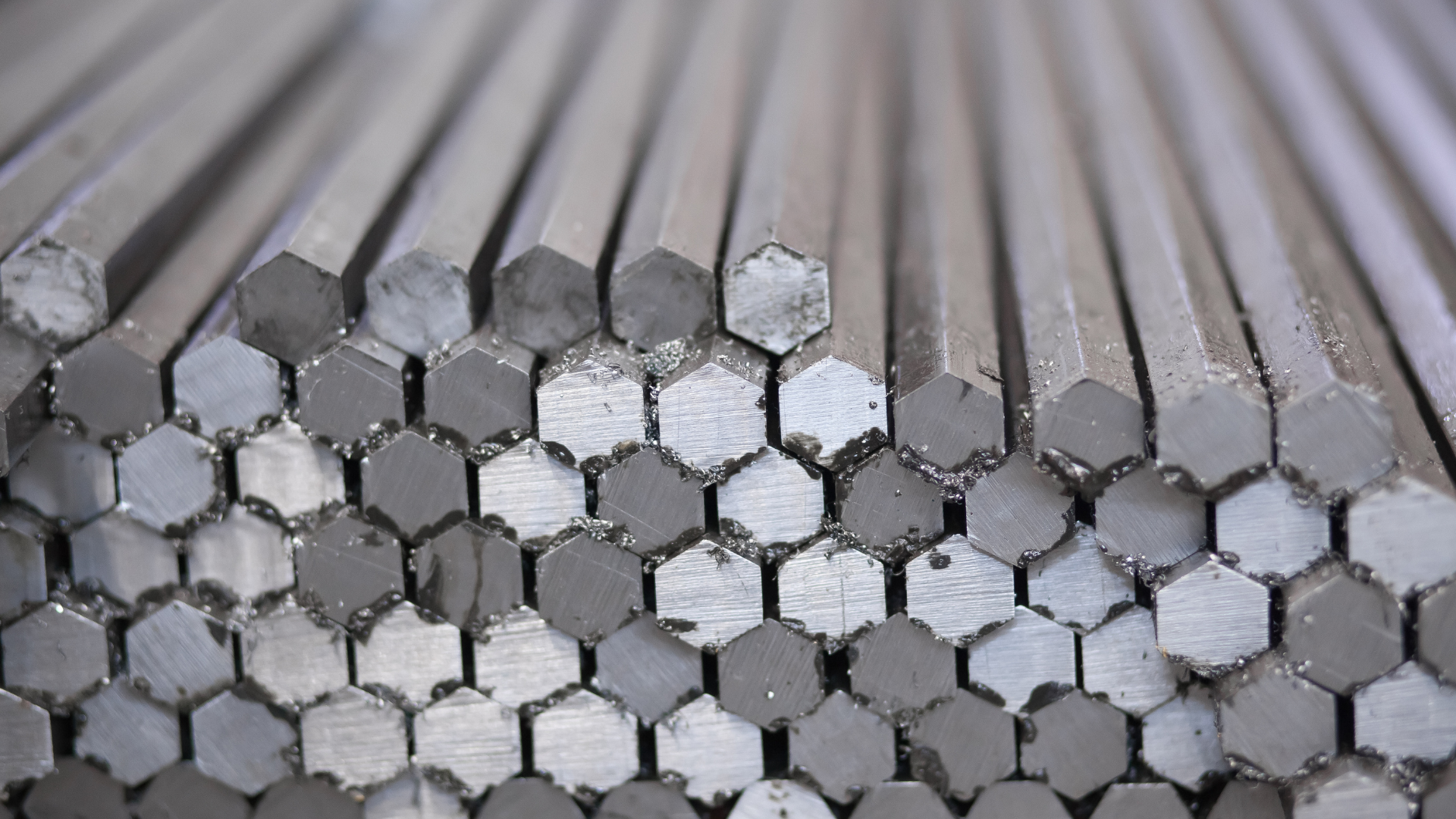
Chrome vs Nickel plating: Comparing Corrosion Resistance
Corrosion resistance is often the deciding factor for parts exposed to moisture, chemicals, or salt environments. Here, the two finishes diverge in meaningful ways.
How Nickel Resists Corrosion
Electroless nickel provides uniform coverage and strong corrosion protection; porosity and corrosion performance depend on deposit quality, thickness, phosphorus content, and service environment. This makes it a strong choice for fasteners, connectors, and hydraulic components exposed to harsh conditions.
How Chrome Resists Corrosion
Hard chrome can provide corrosion resistance, but microcracking can limit its barrier protection unless mitigated by process design or underlayers, thereby allowing moisture to reach the substrate over time. It’s often layered over nickel to combine chrome’s hardness with nickel’s superior barrier protection.
Nickel vs. Chrome Plating: Comparing Hardness And Wear Performance
For parts that slide, rotate, or bear heavy loads, hardness and wear resistance determine service life. This is where the nickel vs chrome distinction becomes most pronounced.
Nickel Hardness and Wear
Nickel offers good hardness and wear resistance, and electroless nickel can be heat-treated to significantly increase surface hardness. It performs well in moderate-wear applications while still delivering corrosion protection.
Chrome Hardness and Wear
Chrome is a leader in surface hardness and wear resistance, making hard chrome a common choice for high-friction, high-load components such as actuator rods, hydraulic cylinder rods, pistons, and bearing surfaces. Its low coefficient of friction also reduces galling on moving parts.
Cost And Dimensional Considerations For Nickel And Chrome Plating
Beyond performance, cost, and dimensional accuracy, shape plating decisions are particularly important for tight-tolerance aerospace parts.
Cost Factors
Electroless nickel often carries higher chemistry and processing costs but delivers uniform coverage that can reduce rework. Hard chrome can be cost-effective for durable wear surfaces, but it may require post-plate grinding, adding labor
Dimensional Impact
Electroless nickel deposits with excellent thickness uniformity, making it ideal for parts requiring precise tolerances and even coverage in recesses. Chrome tends to build unevenly on complex shapes and often needs finish grinding to meet dimensional specs, though post-plate grinding depends on the specification and part geometry.
Which Aerospace Applications Call For Nickel Plating?
Nickel plating suits parts where corrosion resistance, uniform coverage, and dimensional precision matter most. Its versatility makes it a workhorse across many programs.
Ideal Nickel Applications
Nickel is well-suited to fasteners, hydraulic components, electrical connectors, and intricate parts with complex geometries. Electroless nickel’s even coverage is especially valuable for internal surfaces and threaded features that electrolytic processes struggle to coat consistently.
Which Aerospace Applications Call For Chrome Plating?
Chrome plating is the choice when surfaces must endure sustained wear, friction, and heavy loads. Its hardness makes it indispensable for specific dynamic components.
Ideal Chrome Applications
Chrome excels on actuator rods, landing gear cylinders, pistons, and bearing surfaces subjected to repeated mechanical stress. Its wear resistance and low friction extend the service life of moving parts operating under demanding conditions.
When evaluating your options, a thorough nickel plating aerospace comparison helps clarify where each process delivers the most value, whether that’s the uniform coverage of electroless nickel or the hardness of hard chrome on high-wear surfaces.
How Valence Helps You Choose The Right Plating Solution
We don’t just plate parts, we help you make the right engineering call and deliver it consistently at scale. As a fully integrated finishing platform, we eliminate the supplier handoffs that introduce risk into complex programs.
Technical Guidance
Our teams bring deep expertise in both nickel and chrome processes, helping you weigh corrosion, hardness, cost, and dimensional needs against your application requirements.
Integrated, Certified Capacity
Because we combine non-destructive testing, chemical processing, specialty plating, coatings, and more under one Valence Standard, we ensure consistency, audit readiness, and on-time delivery across every site and program.
To explore the full range of certified locations supporting your program, visit our Locations & Compliance Hub.

Final Thoughts
There’s no universal winner in the nickel vs chrome debate, only the right finish for the job. Nickel leads in corrosion resistance, uniform coverage, and dimensional precision, while chrome dominates in hardness and wear resistance. The best choice depends on how and where your part performs. With the right finishing partner, that decision becomes a source of reliability rather than risk, and Valence is built to deliver exactly that.
Frequently Asked Questions About Nickel Plating vs. Chrome Plating
Is nickel plating better than chrome plating?
Neither is universally better; it depends on the application. Nickel offers superior corrosion resistance and uniform coverage, while chrome delivers greater surface hardness and wear resistance. The right choice hinges on your part’s function, environment, and tolerance requirements.
What type of plating is most commonly used?
Electroless nickel is a widely specified aerospace finish for applications requiring uniform thickness, corrosion resistance, and wear performance. Hard chrome remains common for high-wear surfaces like actuator rods and cylinders.
Is chrome plating illegal?
Chrome plating is not illegal, but processes involving hexavalent chromium are heavily regulated due to health and environmental risks. Workers performing chromium electroplating may be exposed to hexavalent chromium, which can cause severe health effects, including lung cancer. OSHA regulates occupational exposure under 29 C.F.R. § 1910.1026, with a permissible exposure limit of 5 μg/m³ as an 8-hour time-weighted average. Many facilities are shifting toward safer trivalent chrome and alternative coatings.
What aerospace industry standards and regulations apply to nickel and chrome plating?
Aerospace plating typically follows specifications such as AMS standards, Nadcap accreditation, and OEM-specific requirements. Facilities must maintain a compliant quality management system, documented process controls, and audit-ready records to serve commercial and military programs.
Are there environmental or safety concerns associated with chrome or nickel plating?
Yes, hexavalent chromium is a known carcinogen that targets the respiratory system, kidneys, liver, skin, and eyes, requiring strict controls, and nickel chemistries demand careful handling and waste management. Certified facilities use environmental controls, ventilation, and disposal protocols to protect workers and meet regulatory limits.
Can nickel and chrome plating be combined for aerospace components?
Yes, chrome is frequently plated over a nickel undercoat to combine nickel’s corrosion barrier with chrome’s hardness and wear resistance. This layered approach is common for demanding components needing both protection and durability.