
Key Takeaways:
- Machining disrupts corrosion resistance. Any fabrication process removes stainless steel’s protective chromium oxide layer, making passivation essential before aerospace components enter service.
- Process control determines compliance. AMS 2700 and ASTM A967 govern both nitric and citric acid methods, proper temperature, concentration, and rinsing, separating compliant passivation from a corrosion risk.
- Your passivation partner affects flight safety. Nadcap accreditation, full traceability, and integrated finishing services keep aerospace programs audit-ready and airworthy.
Stainless steel sounds invincible, but without passivation, it is far more vulnerable than its name suggests. Free iron left on the surface after machining or fabrication can trigger corrosion, compromising even the most precisely engineered aerospace components.
Valence Surface Technologies, the world’s largest independent aerospace surface finishing company, brings deep expertise in passivation processes that meet the exacting standards of aerospace, defense, and space programs.
This guide breaks down what passivation of stainless steel is, how the process works, and when aerospace components need it most.
What Is Passivation Of Stainless Steel And Why Does It Matter?
Passivation is a controlled chemical treatment that removes free iron from stainless steel surfaces, allowing a thin chromium oxide layer to form and restore the material’s natural corrosion resistance. This protective film is disrupted during machining, welding, or handling, leaving components vulnerable to pitting, stress corrosion cracking, and structural failure in aerospace environments.
Without passivation, even high-grade stainless alloys can corrode when exposed to temperature fluctuations, humidity, and common aerospace fluids.
- Free iron from machining creates localized corrosion sites despite the material’s stainless designation.
- The chromium oxide layer is self-healing; if damaged, it regenerates upon exposure to oxygen, unlike applied coatings that wear away permanently.
- Aerospace specifications, including AMS 2700 and ASTM A967, mandate passivation requirements, defining process parameters, testing protocols, and acceptance criteria across production lots.
How The Passivation Process Works On Stainless Steel
Passivation follows a controlled sequence: cleaning, acid immersion, rinsing, and oxide formation. The goal is to dissolve free iron, expose chromium, and allow the protective layer to develop uniformly across the part surface.
- Pre-Cleaning: Parts undergo alkaline cleaning or solvent degreasing to remove oils, cutting fluids, and organic contaminants before acid immersion.
- Acid Immersion: Parts are immersed in nitric or citric acid solutions at controlled temperatures. Nitric acid processes typically use 20–45% concentrations at 70–140°F; citric acid processes use 4–10% at 120–160°F, per applicable specification.
- Rinsing: Multiple deionized water rinse cycles remove all acid residues. Incomplete rinsing can initiate corrosion.
- Oxide Formation: Once dried, the cleaned surface reacts with atmospheric oxygen, forming the chromium oxide passive film.
Process duration ranges from 30 minutes to several hours, depending on part geometry, contamination levels, and specification requirements.
When Does Stainless Steel Need Passivation In Aerospace Applications?
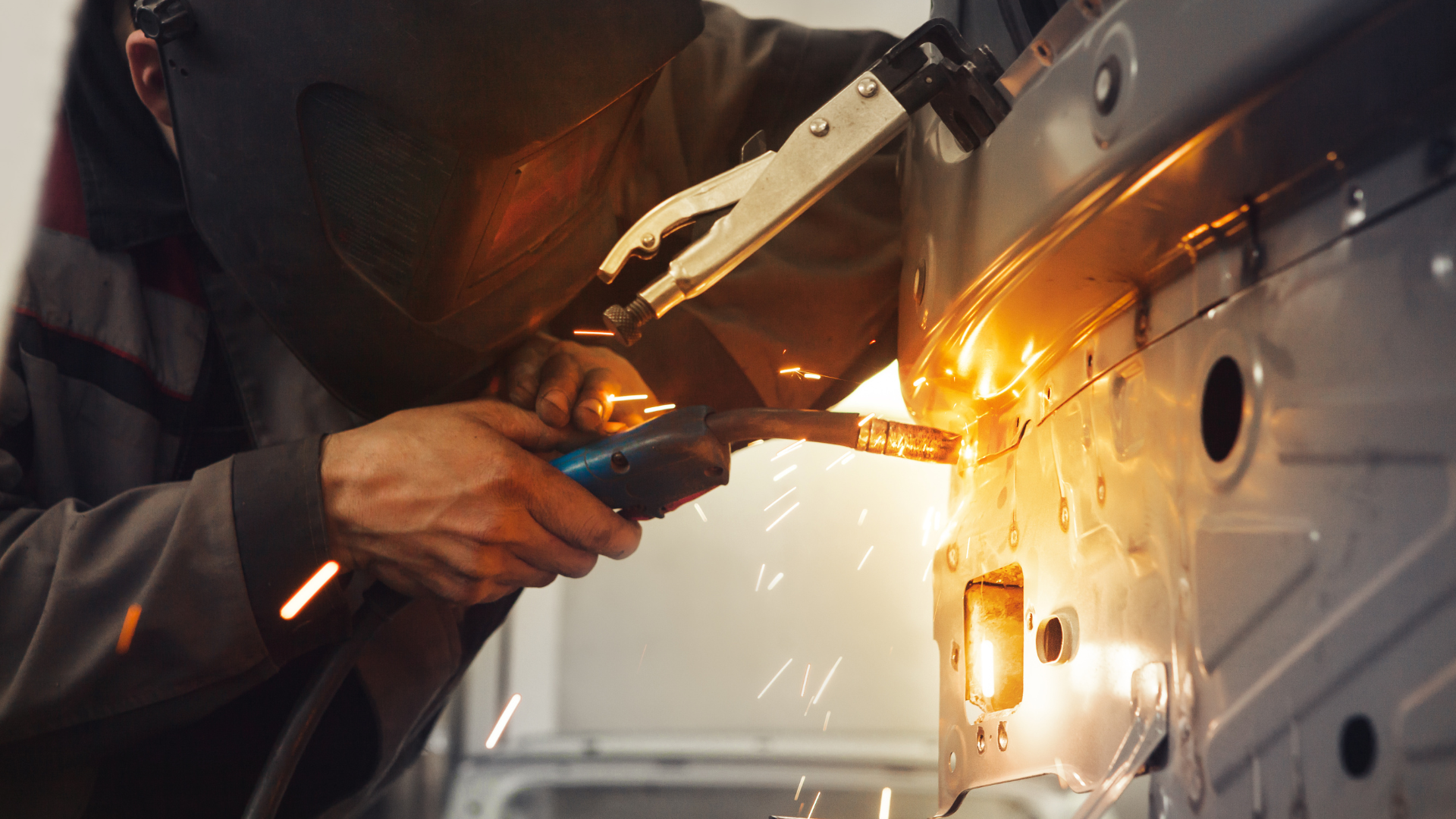
Passivation is required whenever stainless steel components undergo machining, welding, forming, or heat treatment, operations that introduce contamination or disrupt the natural oxide layer. It is also mandatory when aerospace specifications explicitly require it or when components contact corrosive fluids in service.
After Machining
Turning, milling, and grinding embed tool particles and disrupt surface layers, compromising corrosion resistance until passivation restores the oxide.
After Welding
Heat tint and weld scale reduce local corrosion resistance. Descaling or pickling followed by passivation restores uniform protection.
High-Stress Components
Landing gear, fasteners, and hydraulic parts require passivation to eliminate surface contaminants that could initiate corrosion under sustained load and environmental exposure.
Specification-Mandated Treatment
MIL-STD, AMS, and OEM requirements frequently specify passivation as a mandatory step, requiring documented process control and traceability for audit compliance.
The Difference Between Passivation And Other Surface Treatments
Passivation is often confused with electropolishing, pickling, anodizing, and protective coatings. Each works through a different mechanism and serves a distinct purpose.
Passivation vs. Electropolishing
Electropolishing removes a thin metal layer for an ultra-smooth finish while simultaneously passivating. Passivation is purely chemical and does not alter surface roughness.
Passivation vs. Pickling
Pickling uses stronger acids to remove heavy scale and weld discoloration before passivation. Pickling removes material; passivation removes only contaminants.
Passivation vs. Anodizing
Anodizing applies to aluminum and titanium, not stainless steel, and grows a thicker oxide layer using electrical current rather than chemical reaction.
Passivation vs. Coatings
Coatings apply a separate material layer that wears over time. Passivation enhances the base material’s natural properties and self-heals, making it preferable for precision surfaces where coating thickness affects fit or function.
How To Choose The Right Passivation Partner For Aerospace Components
Selecting a passivation provider for aerospace components goes beyond price. The right partner supports flight safety, audit readiness, and program continuity. Valence Surface Technologies, the world’s largest independent aerospace surface finishing company, holds the certifications, capacity, and integrated capabilities that aerospace programs demand.
- Certification Compliance: Verify current Nadcap accreditation for chemical processing, AS9100 certification, and approvals for AMS 2700, ASTM A967, and OEM-specific standards. Our stainless steel passivation services dallas are fully aligned with these requirements, offering a compliant, audit-ready solution for regional programs.
- Process Control and Testing: Look for documented parameters, calibrated equipment, and in-house testing, including salt spray, copper sulfate immersion, and water break tests.
- Capacity and Lead Time: Assess throughput rates, on-time delivery metrics, and expedite capabilities for AOG situations.
- Integrated Services: Providers offering passivation alongside NDT, cleaning, plating, and coating eliminate vendor handoffs, reduce transportation risk, and simplify quality documentation. Our stainless steel passivation services houston location exemplify this integrated model, bringing together multiple finishing capabilities under one roof to support complex program requirements across the Gulf Coast region.
- Traceability and Documentation: Certificates of conformance, process certifications, and full material traceability are non-negotiable for compliance with aerospace audits.
Final Thoughts
Passivation isn’t optional for aerospace-grade stainless steel; it’s a critical line of defense against corrosion, structural failure, and costly component rejection. Whether your parts have been machined, welded, or heat-treated, restoring the chromium oxide layer through a properly controlled passivation process is essential to meeting spec and ensuring long-term performance.
Valence Surface Technologies brings the certifications, capacity, and integrated expertise that aerospace programs require, so your components are protected from surface to system.
Frequently Asked Questions About What Is Passivation? A Plain-English Guide For Aerospace Engineers
How does passivation protect stainless steel from corrosion?
Passivation removes free-iron contamination and allows the formation of a protective chromium oxide layer that prevents oxygen and moisture from reaching the base material.
What is the difference between passivation and electropolishing?
Passivation is a chemical-only treatment that removes contaminants, while electropolishing uses electrical current to remove a thin surface layer and create an ultra-smooth surface, passivating the underlying material.
Which aerospace standards govern passivation requirements?
AMS 2700 and ASTM A967 are the primary current specifications governing stainless steel passivation in aerospace applications. Legacy drawings may reference QQ-P-35 or AMS-QQ-P-35, which have been canceled and superseded by standards such as AMS 2700. OEM-specific requirements from Boeing, Airbus, Lockheed Martin, and other manufacturers also apply.
What are the main passivation methods used in aerospace manufacturing?
Nitric acid passivation and citric acid passivation are the two primary methods. Both AMS 2700 and ASTM A967 include procedures for nitric and citric acid treatments, each available in multiple variations depending on alloy type, contamination level, and specification requirements.
How does citric acid passivation compare to nitric acid passivation?
Citric acid is less hazardous to handle and dispose of while providing comparable corrosion resistance. Nitric acid has a longer history of use and may be required by older specifications. Both methods are included in current aerospace passivation standards.
What testing and quality controls verify successful passivation?
Salt spray testing (often per ASTM B117), copper sulfate immersion tests, water-break tests, and humidity exposure testing are commonly used verification methods that confirm adequate oxide layer formation and the absence of free iron contamination (Alliance Chemical, 2025).